自律神經失調症 · Autonomic Dysfunction
When throbbing, dizziness, sweating, digestive discomfort, and brain fog appear together, we provide guidance on the primary causes to check and how autonomic symptoms are evaluated during a medical consultation.
What to check first
We identify when the symptoms began, situations that worsen them, and any accompanying discomfort.
What to distinguish together
We narrow down the possibilities by comparing similar-looking conditions with previous test results.
What to look for on this page
We provide guidance on major patterns, differential criteria, and the sequence of confirmation during the medical evaluation.
General tests check for structural abnormalities (imaging and blood tests). These symptoms may be due to a functional imbalance between the sympathetic and parasympathetic nerves (based on constitutional patterns such as Liver Qi Stagnation or Heart and Spleen Deficiency), which is evaluated through pattern identification (Byeonjeung).
Korean medicine diagnosis looks at a different layer than hospital tests: it is not superior, but a different perspective.
Key information at a glance
- Pattern identification is categorized into four types: Liver Qi Stagnation, Heart and Spleen Deficiency, Heart and Gallbladder Deficiency, and Upper-Body Heat and Lower-Body Cold.
- Differential diagnosis is performed to distinguish these from panic disorder, menopausal syndrome, chronic fatigue syndrome, and arrhythmia.
- Even if there are no abnormalities in tests, we approach the condition as an issue of autonomic balance.
We look beyond the tests to identify the root cause of your specific case.
Overview
Autonomic Nervous SystemDysfunction occurs when the balance between the sympathetic and parasympathetic nerves is disrupted, leading to throbbing, Heat sensation in the upper body, brain fog, chronic fatigue, and insomnia are among the various symptoms that may appear. Anxiety disorders, panic disorders, irritable bowel syndrome, and tinnitus may also occur. A characteristic feature is that symptoms continue to shift from one part of the body to another, even when no clear diagnosis is found after visiting multiple departments.
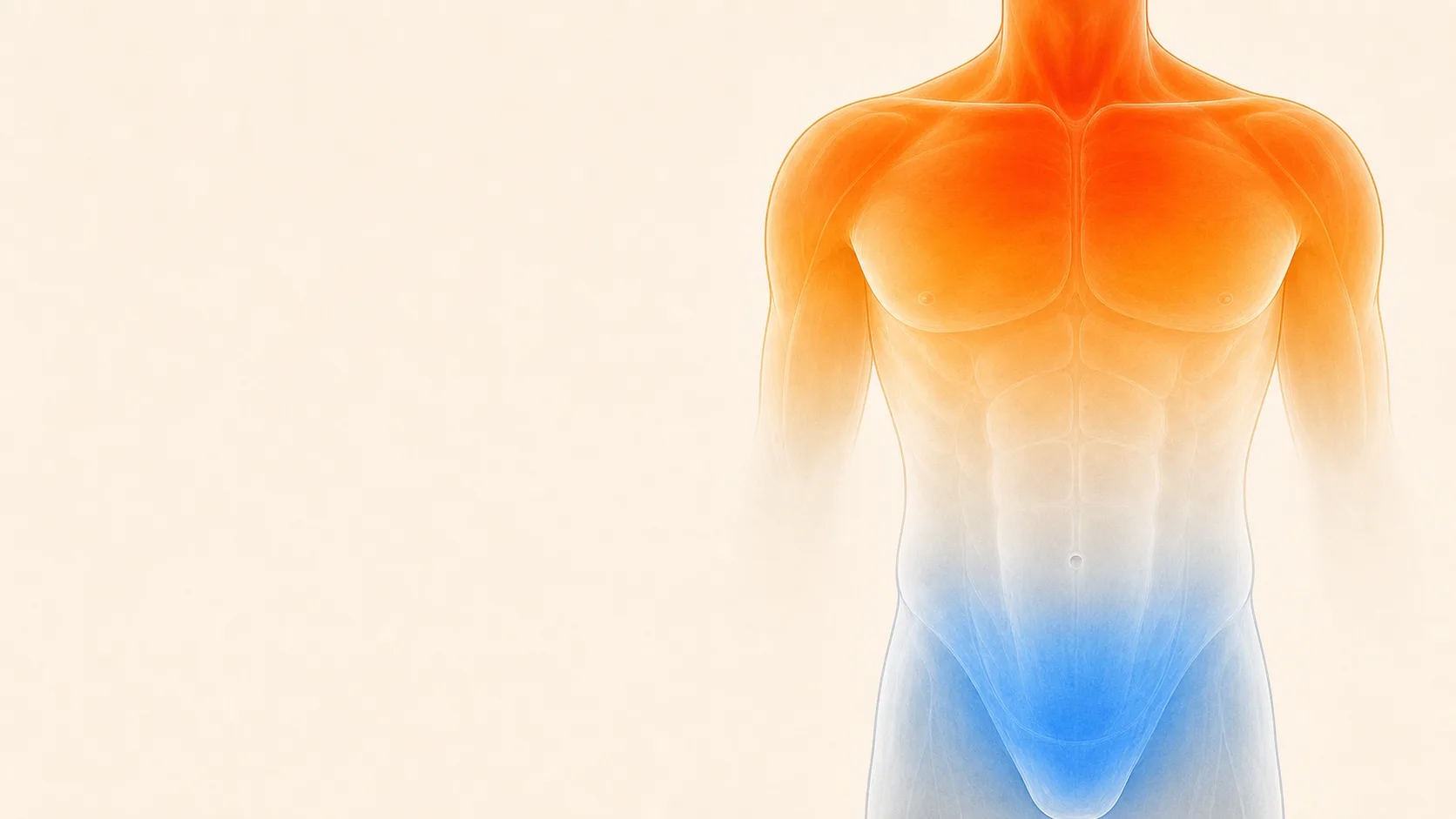
The autonomic nervous system is responsible for functions that are regulated automatically, such as heart rate, body temperature, digestion, and sweating. When this balance is disrupted, sensations of heat and cold, or states of excitement and lethargy, appear mixed together. In Korean medicine, this is often viewed as a state where heat and cold are intertwined, so autonomic dysfunction is Hanyeol(寒熱) a representative condition handled within this framework.
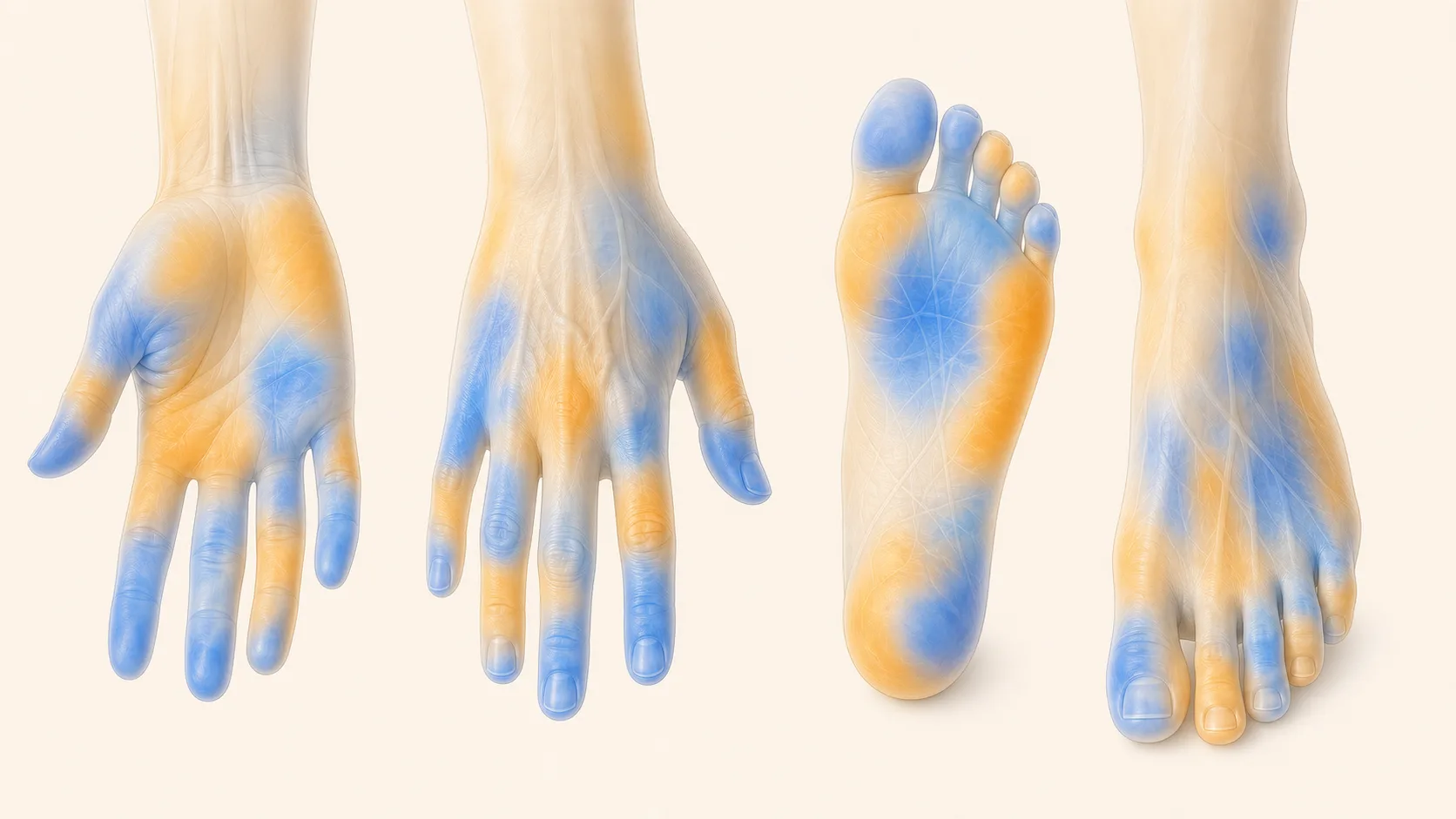
In terms of the internal organs (臟腑), the Liver (肝) and Heart (心) are at the center. The Liver (肝) is responsible for the flow of Qi (氣) and emotions; when Liver Qi (肝氣) is blocked due to stress, the rhythm of tension and relaxation in the autonomic nervous system is also disrupted. The Heart (心) governs the mind and the chest, so when this imbalance affects the Heart, it manifests as palpitations, anxiety, and insomnia. When this is combined with a state where heat rises upward and Yang energy fails to reach the lower body Upper-body heat and lower-body cold(上熱下寒), a mixed pattern emerges where the face feels flushed while the hands and feet are cold.
Imaging and blood tests are tools to identify structural abnormalities, so these functional imbalances often do not appear clearly in tests. A normal test result is different from the body feeling comfortable; Baekrokdam Heat and Cold Clinic examines this state of balance through pulse diagnosis, abdominal diagnosis, and patient interviews.
In that case, where did this autonomic imbalance originate for me? Even within the same autonomic dysfunction, the pattern of intertwined heat and cold differs from person to person. Therefore, we look into the single diagnosis of 'autonomic dysfunction' by dividing it into four categories.
Different types of the same symptom
It is divided into four typical patterns depending on constitution, psychological state, and how heat and cold are intertwined.
Liver Qi Stagnation type (肝氣鬱結)
Due to stress, the liver (肝) to become blocked. Since the liver is connected to emotions and the sides of the body, this leads to chest tightness, frequent sighing, irritability, and a feeling of something stuck in the throat.
The approach is to release the blocked energy to restore rhythm.
Heart-Spleen Deficiency Type (心脾兩虛)
the heart (心) and spleen (脾) are both weak. Weakness in the spleen leads to poor digestion and constant fatigue, while weakness in the heart leads to excessive worry and insomnia.
The approach is to tonify both the heart and spleen.
Heart-Gallbladder Deficiency Type (心膽虛怯)
the heart (心) and gallbladder (膽) is weak, making the person easily startled. The gallbladder (膽) is responsible for decisiveness and courage; when this is weak, one may be startled by small noises, experience heart palpitations, and feel constant anxiety.
The approach is to regulate and stabilize the heart and gallbladder.
Upper Heat, Lower Cold Type (上熱下寒)
A type where the temperature balance between the upper and lower body is disrupted. Heat rises to the head and face, while the hands, feet, and lower abdomen remain cold. It is a matter of balance: cooling the heat makes the lower body colder, and warming the lower body worsens the upper heat.
The approach is to coordinate the upper and lower body together.
When categorized by these types, several things previously taken for granted may look different. Let's start by addressing some common misconceptions encountered in the clinic.
Common Misconceptions
"Since all tests are normal, it's just malingering or a psychological issue."
Imaging and blood tests are tools for detecting structural abnormalities, so they often do not capture functional imbalances of the autonomic nervous system. A normal test result does not mean there are no symptoms, and the state of balance can be examined separately.
"Since the symptoms move around, it's just nervous tension and doesn't need attention."
The fact that symptoms migrate and are low in intensity is a typical characteristic of autonomic nervous system imbalance, not a sign that it is insignificant. If it lowers the quality of life, there is reason to examine the underlying type.
"I have palpitations, so it must be heart disease."
Palpitations caused by autonomic dysfunction are often due to an imbalance in signal regulation rather than a problem with the heart's structure. If heart tests are normal, there is room to approach the issue from the perspective of the autonomic nervous system.
"Cool the heat in the face and warm the cold in the hands and feet."
Upper-body heat and lower-body cold (Sangyeol-hahan) are interconnected; adjusting only one side may cause the other to become more imbalanced. Cooling the heat can sometimes deepen the coldness in the lower body, which is why an approach that addresses both the upper and lower body together is necessary.
It is also necessary to distinguish this from other conditions that are easy to confuse due to similar symptoms. Below are the clues used to differentiate them.
Points to verify even if symptoms seem similar
Panic Disorder
While panic disorder is characterized by extreme terror and attacks where one feels as if they might die, autonomic dysfunction is characterized by chronic, low-intensity physical discomfort.
Menopausal Syndrome
Although the sensations of heat in the upper body and sweating are similar, autonomic dysfunction can occur in people of all ages and genders due to stress and lifestyle habits, in addition to hormonal changes.
Chronic Fatigue Syndrome
It is distinguished by whether neurological signals, such as palpitations or indigestion, accompany the condition, rather than just a simple lack of energy.
Arrhythmia
It is necessary to differentiate whether the issue is a structural or electrical problem within the heart itself or a problem with autonomic nerve signal transmission; if heart tests show no abnormalities, the possibility of autonomic dysfunction is high.
Therefore, in actual clinical practice, we read the signals the body sends through pulse diagnosis, abdominal diagnosis, and patient consultation.
How this is evaluated during a medical consultation
Pulse diagnosis (脈診) · abdominal diagnosis (腹診) · patient consultation (問診) are performed, and types can be categorized through pattern identification (Byeonjeung) even if there are no clear abnormalities in imaging or blood tests. We distinguish the type by checking the combination of accompanying symptoms, such as palpitations, upper-body heat, brain fog, and insomnia, the distribution of heat and cold (whether the top is hot and the bottom is cold), and the timing of onset (correlation with stress or environmental changes).
Once the type is determined, we decide on the next direction of care tailored to the patient's constitution and the remaining symptoms that were not revealed in tests.
Frequently Asked Questions about Autonomic Dysfunction
Why do I still feel unwell when various tests show no abnormalities?
Imaging and blood tests are tools to identify structural abnormalities, so they often fail to capture functional imbalances. In Korean medicine, we examine the balance of the autonomic nervous system through pulse diagnosis, abdominal diagnosis, and patient consultation.
From the perspective of heat and cold, this is viewed as a process where the temperature imbalance between the upper and lower body accumulates.
- Accumulation of causes for upper and lower body temperature regulation issues
- The body's regulatory functions cannot keep up
- This is seen as manifesting as symptoms such as upper-body heat and lower-body cold
The process of verification during medical evaluation
Now, we verify when and how your symptoms change
Since the way discomfort manifests can differ even within the same diagnosis, we review existing test results alongside the progression of symptoms.
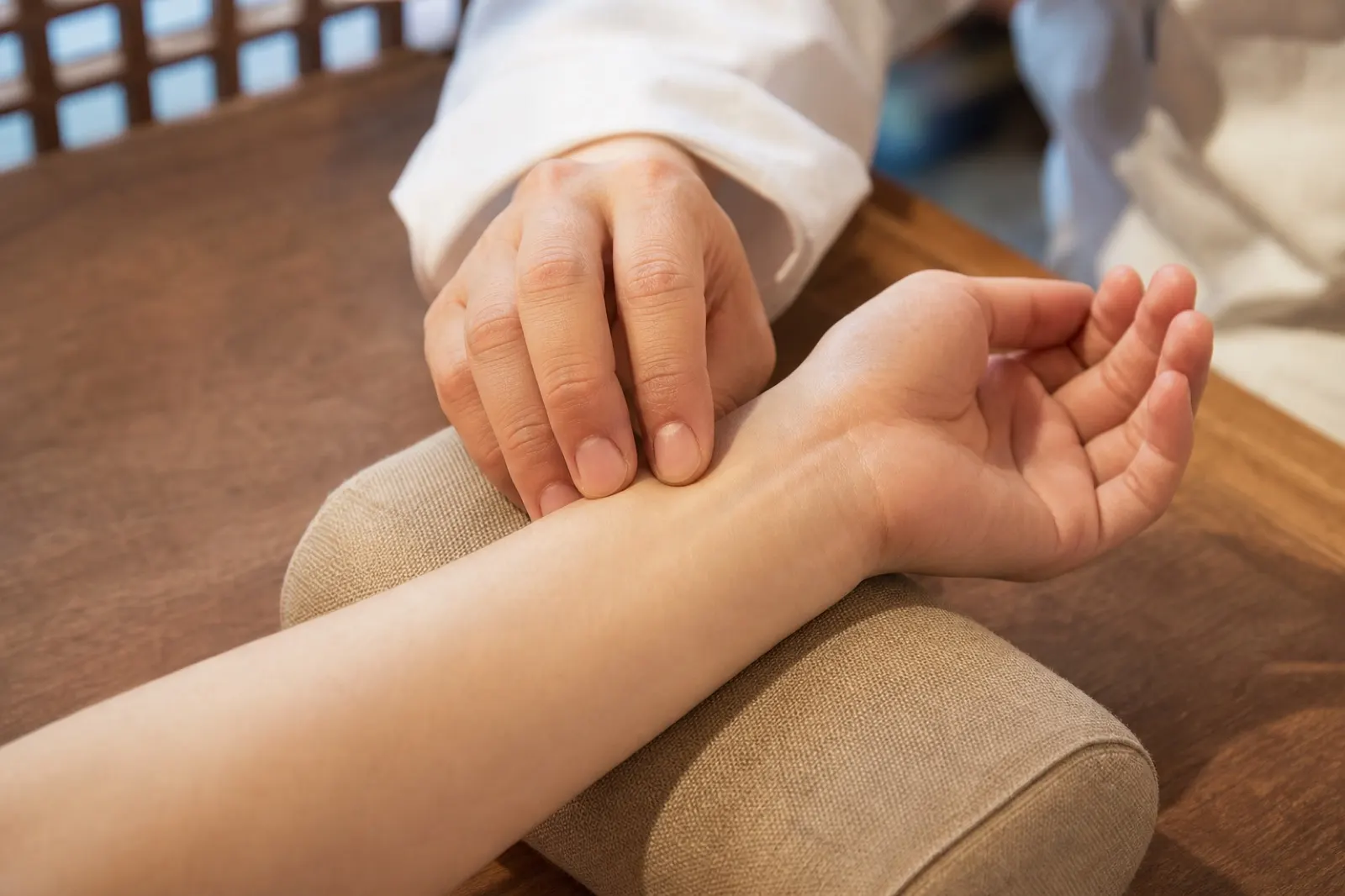
Pattern Identification (Byeon-jeung)
Symptoms are verified in detail through pulse diagnosis and medical interview
Through pulse diagnosis and patient consultation, we identify the tendency toward upper-body heat and lower-body cold and the accompanying patterns, and then explain the approach best suited to the current condition.
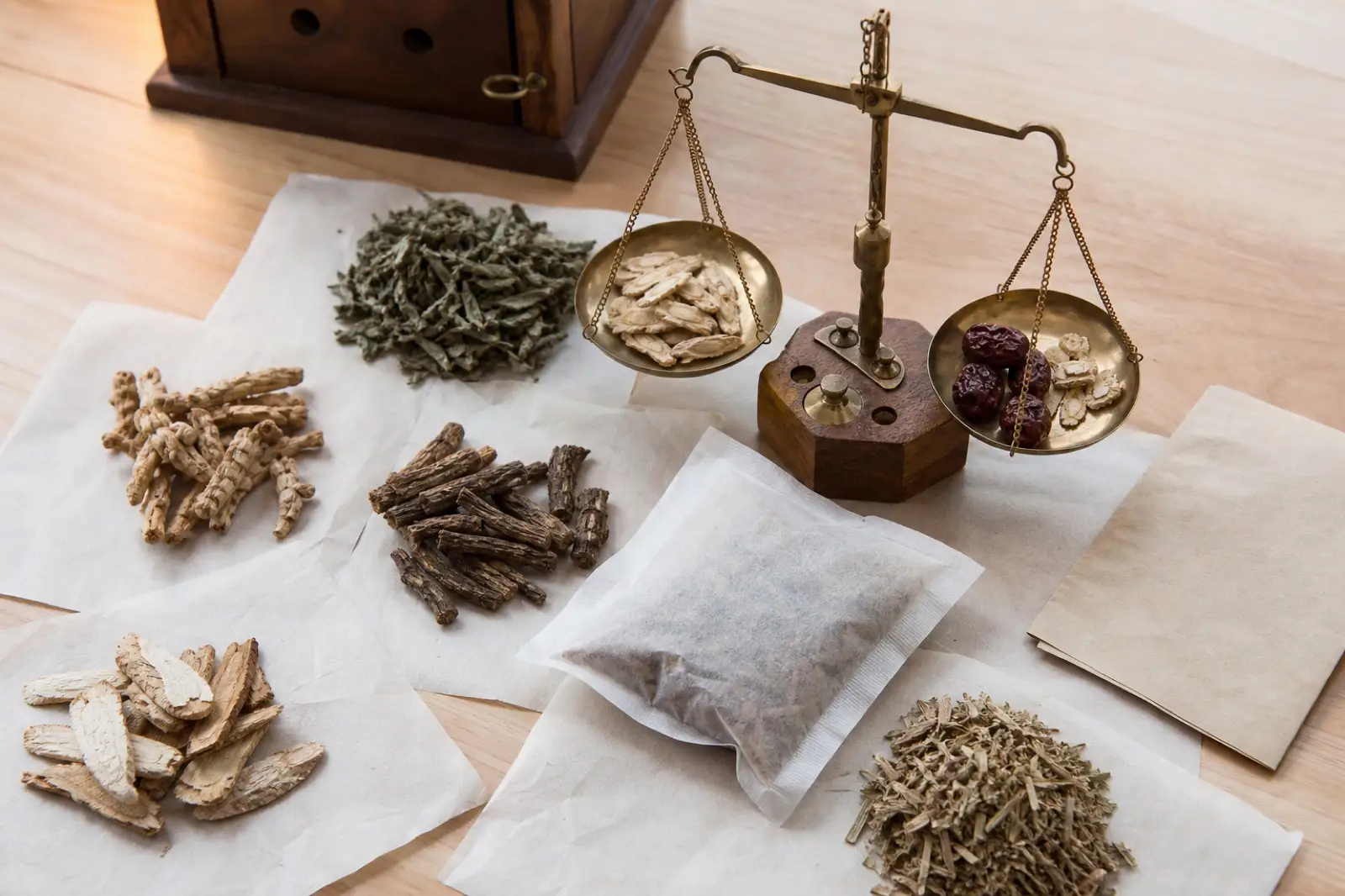
The prescription direction is determined, and changes after administration are verified
Based on the findings from the medical interview and examination, the prescription direction is explained, and the same director oversees everything from preparation to the changes after administration.
 Medical and Content Review
 Baekrokdam's medical standards
Autonomic Dysfunction: Focus on the progression of symptoms rather than the name
We identify when heat in the upper body and coldness in the extremities alternate, and examine the timing in relation to sleep, digestion, and stress. Since the way the body generates and distributes heat varies even for the same diagnosis, we link the patterns identified through pulse diagnosis, tongue diagnosis, and patient interviews to the herbal medicine prescription and the monitoring of progress.
"For discomfort that cannot be explained by test results alone, we trace back through the symptoms starting from when they first began."
- Graduated from Kyung Hee University College of Korean Medicine
- Chief Director of Baekrokdam Korean Medicine Clinic
Before Your Consultation
Please make a note of the times when the temperature differs between the upper and lower body, changes in throbbing, sweating, digestion, and sleep, as well as any previous test results.
During Your First Visit
Rather than concluding with a single symptom name, we categorize the onset, aggravating factors, and accompanying symptoms based on the patterns of cold and heat.
Once Treatment Begins
Prescriptions are adjusted based not only on the intensity of discomfort but also on the frequency, recovery time, and changes observed in your daily life.