末梢神經病症 · Peripheral Neuropathy
When numbness, tingling, burning sensations, or decreased sensation occur in the hands and feet, we provide guidance on the causes and tests for peripheral neuropathy, as well as the background and medical evaluation items to check first, such as diabetes or chemotherapy.
What to check first
We identify when the symptoms began, situations that worsen them, and any accompanying discomfort.
What to distinguish together
We narrow down the possibilities by comparing similar-looking conditions with previous test results.
What to look for on this page
We provide guidance on major patterns, differential criteria, and the sequence of confirmation during the medical evaluation.
General tests examine abnormalities in large nerve fibers (electromyography and nerve conduction studies). These symptoms may be due to changes in small nerve fibers or decreased circulation of Qi and Blood (Bi-syndrome category), which are examined through pattern identification.
Korean medicine diagnosis looks at a different layer than hospital tests: it is not superior, but a different perspective.
Key information at a glance
- Pattern identification is divided into four categories: Qi and Blood Deficiency, Blood Stasis and Obstruction, Damp-Heat and Fluid Accumulation, and Liver and Kidney Yin Deficiency
- Differential diagnosis is performed for stroke (Jungpung), lumbar or cervical disc herniation, restless legs syndrome, and vascular intermittent claudication
- We examine the background of numbness and burning sensations even if there are no abnormalities on the electromyography
We look beyond the tests to identify the root cause of your specific case.
Overview
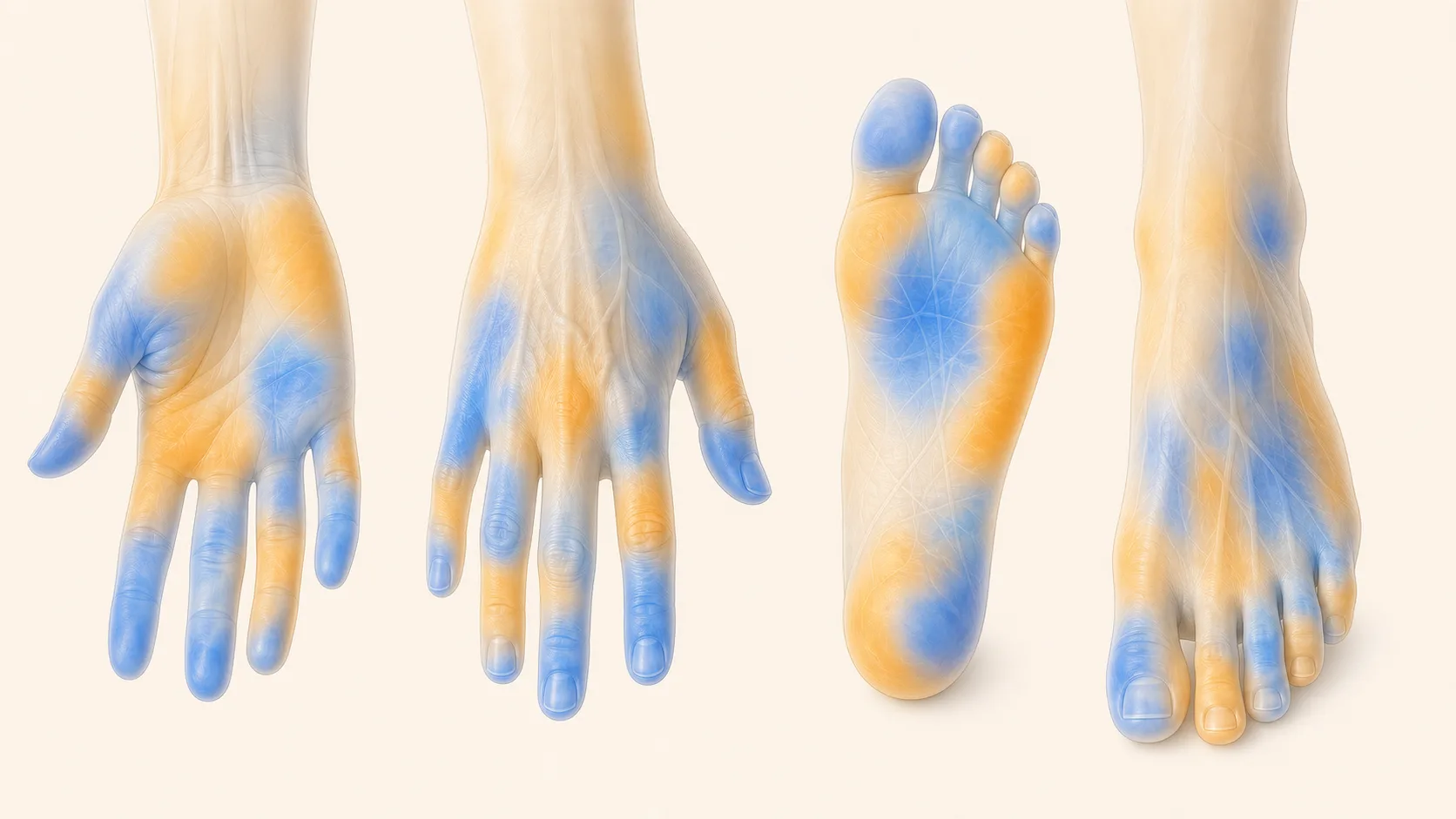
Peripheral neuropathyis the hands and feet's numbness·tingling·burning sensation·These are neurological symptoms manifesting as decreased sensation. Potential underlying causes include diabetes, aging, stress, nutritional deficiencies, or aftereffects of chemotherapy. It commonly begins at the extremities, such as the fingertips and toes, and spreads symmetrically in a pattern similar to the area covered by gloves or socks.
In Korean medicine, this is categorized as Bi-jeung (痺證). 'Bi (痺)' refers to Qi and Blooda state where pathways are blocked, leading to numbness and diminished sensation. This is understood as a condition where nerves cannot function properly due to blocked circulation of Qi and blood (blood stasis) or insufficient nutritional supply (deficiency syndrome). Even for the same sensation of numbness, the approach differs depending on whether it is primarily a burning sensation, a cold sensation, a stabbing pain, or a dull sensation. Because heat (burning) and cold (chilling) can appear mixed, in the Han-yeol (寒熱) axis, this is treated as the Hon (mixed) category along with Sang-yeol-ha-han (heat in the upper body and cold in the lower body).
In terms of the internal organs (臟腑) from this perspective, the key is the strength to allow Qi and blood to reach the fingertips and toes, and the strength to develop the muscles and bones. The Liver (肝) governs the muscles (筋), and the Kidney (腎) governs the bones (骨), and the Yin (肝腎) of the Liver and Kidney (陰When these are deficient, the muscles and bones dry out, sensations become dull, and muscles atrophy. If the blood becomes turbid and microvessels are blocked (blood stasis), or if waste products and heat accumulate (damp-heat), numbness, pain, and burning sensations are added.
Since there are often clear underlying causes such as diabetes or chemotherapy, managing those causes comes first. On top of that, any remaining numbness or sensory abnormalities are examined from the perspective of Qi, blood, muscles, and bones.
Then, where does that remaining numbness come from? Even for the same feeling of numbness, it varies depending on whether burning or coldness is the primary sensation, or whether it is a stabbing pain or a dull sensation. Therefore, we divide the background of numbness into four categories.
Different types of the same symptom
It is divided into four categories based on the background that creates the numbness.
Qi and Blood Deficiency Type (氣血兩虛)
This is a type where the body is weak and energy is low, so nutrients cannot reach the nerves at the ends of the hands and feet. It is mainly associated with old age or wasting diseases, and is accompanied by general fatigue and paleness along with numbness.
The approach is to supplement Qi and Blood.
Blood Stasis Type (瘀血阻絡)
This is a type where the blood becomes turbid and the microvessels (Luo) are blocked. Severe, fixed stabbing pain is common and worsens at night; it is frequent in diabetic neuropathy or as a sequela of trauma.
The approach is to resolve blood stasis to open circulation.
Damp-Heat Type (濕熱浸淫)
This is a type where waste products and heat (damp-heat) have accumulated and permeated the body. There is a burning sensation and a feeling of swelling in the soles of the feet, and it presents as a heavy and sticky sensation.
The approach is to lower both dampness and heat together.
Liver and Kidney Yin Deficiency Type (肝腎陰虛)
This is a type where the condition has become chronic and the Yin of the liver and kidney (肝腎) has dried up. Since the liver governs the muscles (筋) and the kidney governs the bones (骨), sensations become dull and muscle atrophy is accompanied.
The approach is to replenish the Yin of the liver and kidney.
When dividing the background into four categories, some things that were generally taken for granted look a bit different. Let's start by addressing some common misconceptions encountered in the clinic.
Common Misconceptions
"If the electromyography (EMG) is normal, there is no problem with the nerves."
General EMG and nerve conduction studies primarily look for abnormalities in large nerve fibers. Damage to the thin nerves (small fibers) responsible for pain and temperature is not easily revealed by these tests, so there are cases where the test is normal but numbness and burning are distinct.
"Numbness is common as you age, so it can be left alone."
While aging is often the background, there may be hidden causes that require management, such as diabetes or nutritional deficiencies. If the numbness spreads or sensation drops significantly, it is safer to identify the cause.
"Numbness in the hands and feet is always a blood circulation problem."
Circulation (blood stasis) is one cause, but the backgrounds are diverse, including lack of nerve nutrition (Qi and blood deficiency), damp-heat, and drying of muscles and bones (liver and kidney yin deficiency). If approached uniformly with only a circulation agent, it often does not fit well.
"Since only one side is numb, it must be a herniated disc pressing on a nerve."
Numbness on one side or in a specific segment is often caused by nerve compression, such as a herniated disc; however, peripheral neuropathy is characterized by symmetrical spreading starting from the tips of the hands and feet. Because the patterns differ, a differential diagnosis is necessary.
Even after categorizing the types and correcting misconceptions, numbness in the extremities is easily confused with other neurological symptoms. Below are the clues to help distinguish them.
Points to verify even if symptoms seem similar
Stroke (Jungpung)
Sudden paralysis or sensory loss occurs across one entire side of the body (including the face). Peripheral neuropathy often occurs symmetrically starting from the tips of the hands and feet.
Lumbar or Cervical Disc Herniation
Numbness appears along specific nerve segments due to spinal nerve compression. Peripheral neuropathy is characterized by appearing overall, similar to the areas covered by gloves or socks.
Restless Legs Syndrome
There is a strong urge to move the legs, primarily at night. In peripheral neuropathy, pain and sensory abnormalities persist regardless of movement.
Vascular Intermittent Claudication
Leg pain is severe when walking and improves with rest. Peripheral neuropathy tends to have pain that worsens during rest or at night.
Therefore, in actual medical practice, we examine the patterns of symptoms and the overall physical condition to determine where the imbalance of Qi and Blood is located.
How this is evaluated during a medical consultation
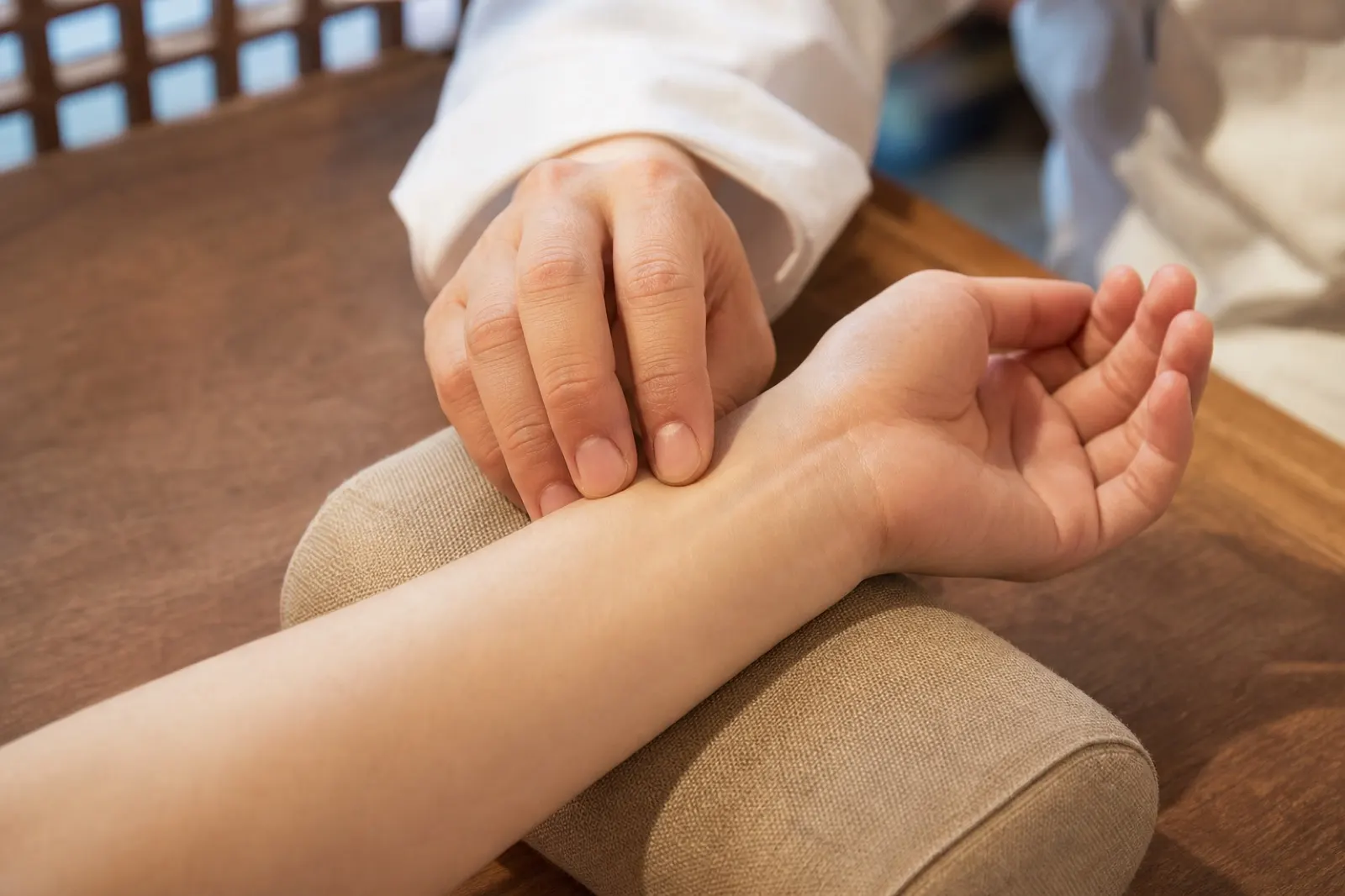
Pulse diagnosis (脈診) · abdominal diagnosis (腹診) · patient consultation (問診) we examine the overall state of Qi and Blood, while checking pain patterns (burning vs. cold, tingling vs. numbness), time of onset, symmetry, background factors such as diabetes, menopause, or chemotherapy, and sleep quality. Even if an electromyography (EMG) is normal, abnormalities in sensory nerves can be evaluated separately.
Once the type of numbness is identified, we manage the causes, such as diabetes or chemotherapy, while addressing the remaining symptoms according to the patient's constitution.
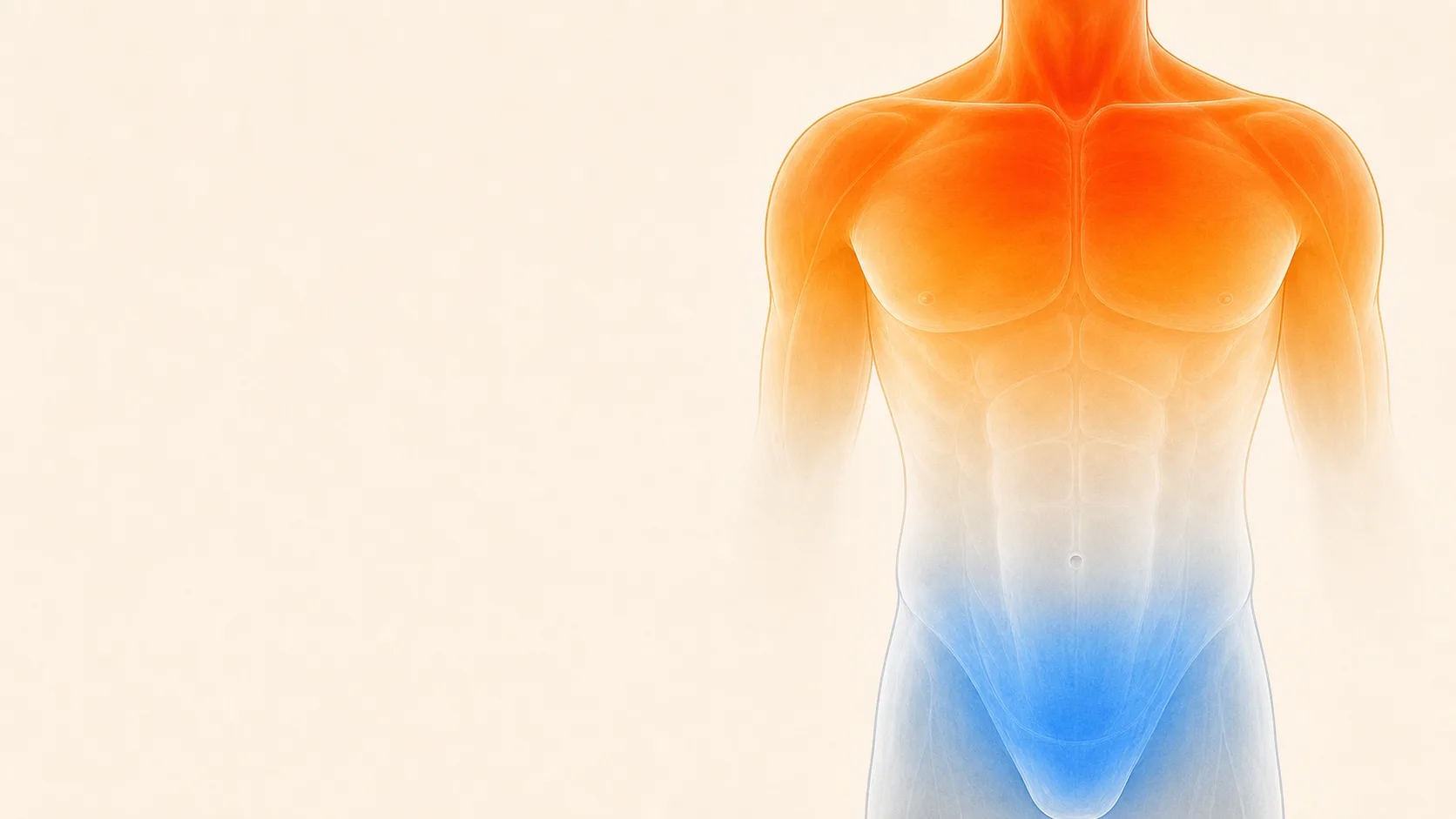
From the perspective of heat and cold, this is viewed as a process where the temperature imbalance between the upper and lower body accumulates.
- Accumulation of causes for upper and lower body temperature regulation issues
- The body's regulatory functions cannot keep up
- This is seen as manifesting as symptoms such as upper-body heat and lower-body cold
The process of verification during medical evaluation
Now, we verify when and how your symptoms change
Since the way discomfort manifests can differ even within the same diagnosis, we review existing test results alongside the progression of symptoms.
Pattern Identification (Byeon-jeung)
Symptoms are verified in detail through pulse diagnosis and medical interview
Through pulse diagnosis and patient consultation, we identify the tendency toward upper-body heat and lower-body cold and the accompanying patterns, and then explain the approach best suited to the current condition.
The prescription direction is determined, and changes after administration are verified
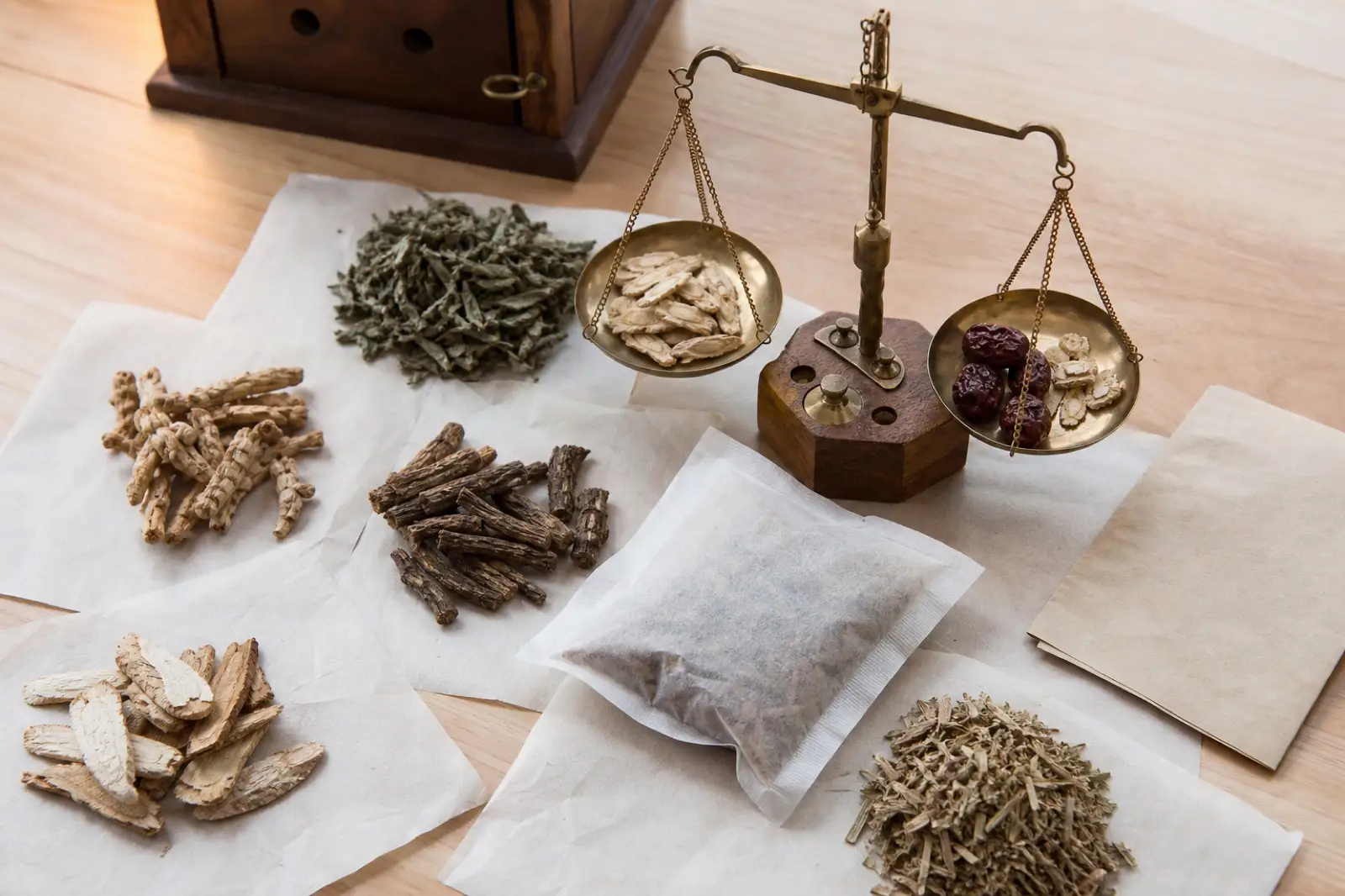
Based on the findings from the medical interview and examination, the prescription direction is explained, and the same director oversees everything from preparation to the changes after administration.
 Medical and Content Review
 Baekrokdam's medical standards
Peripheral Neuropathy: Listening to the progression before the name
We identify when heat in the upper body and coldness in the extremities alternate, and examine the timing in relation to sleep, digestion, and stress. Since the way the body generates and distributes heat varies even for the same diagnosis, we link the patterns identified through pulse diagnosis, tongue diagnosis, and patient interviews to the herbal medicine prescription and the monitoring of progress.
"For discomfort that cannot be explained by test results alone, we trace back through the symptoms starting from when they first began."
- Graduated from Kyung Hee University College of Korean Medicine
- Chief Director of Baekrokdam Korean Medicine Clinic
Before Your Consultation
Please make a note of the times when the temperature differs between the upper and lower body, changes in throbbing, sweating, digestion, and sleep, as well as any previous test results.
During Your First Visit
Rather than concluding with a single symptom name, we categorize the onset, aggravating factors, and accompanying symptoms based on the patterns of cold and heat.
Once Treatment Begins
Prescriptions are adjusted based not only on the intensity of discomfort but also on the frequency, recovery time, and changes observed in your daily life.