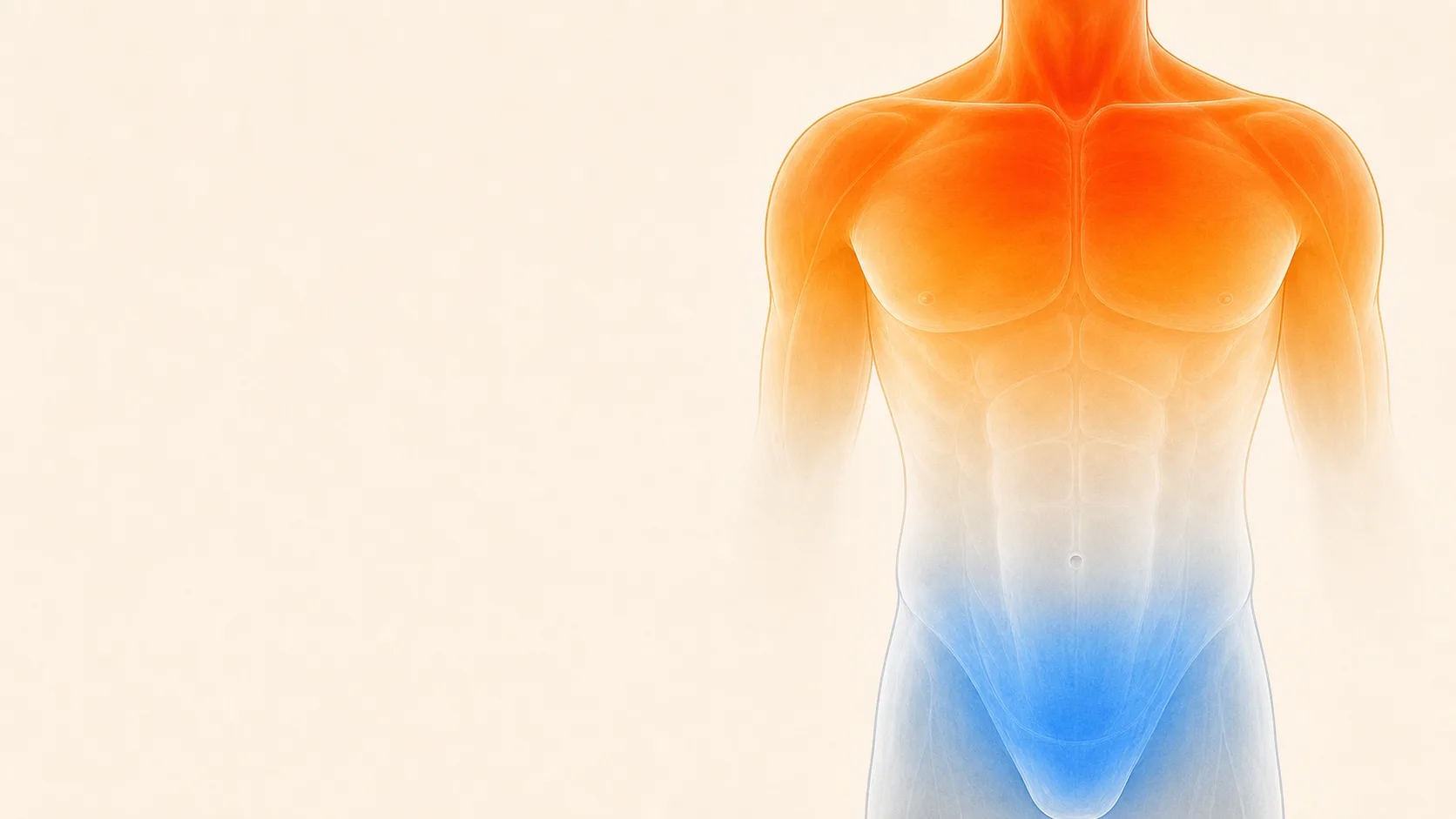
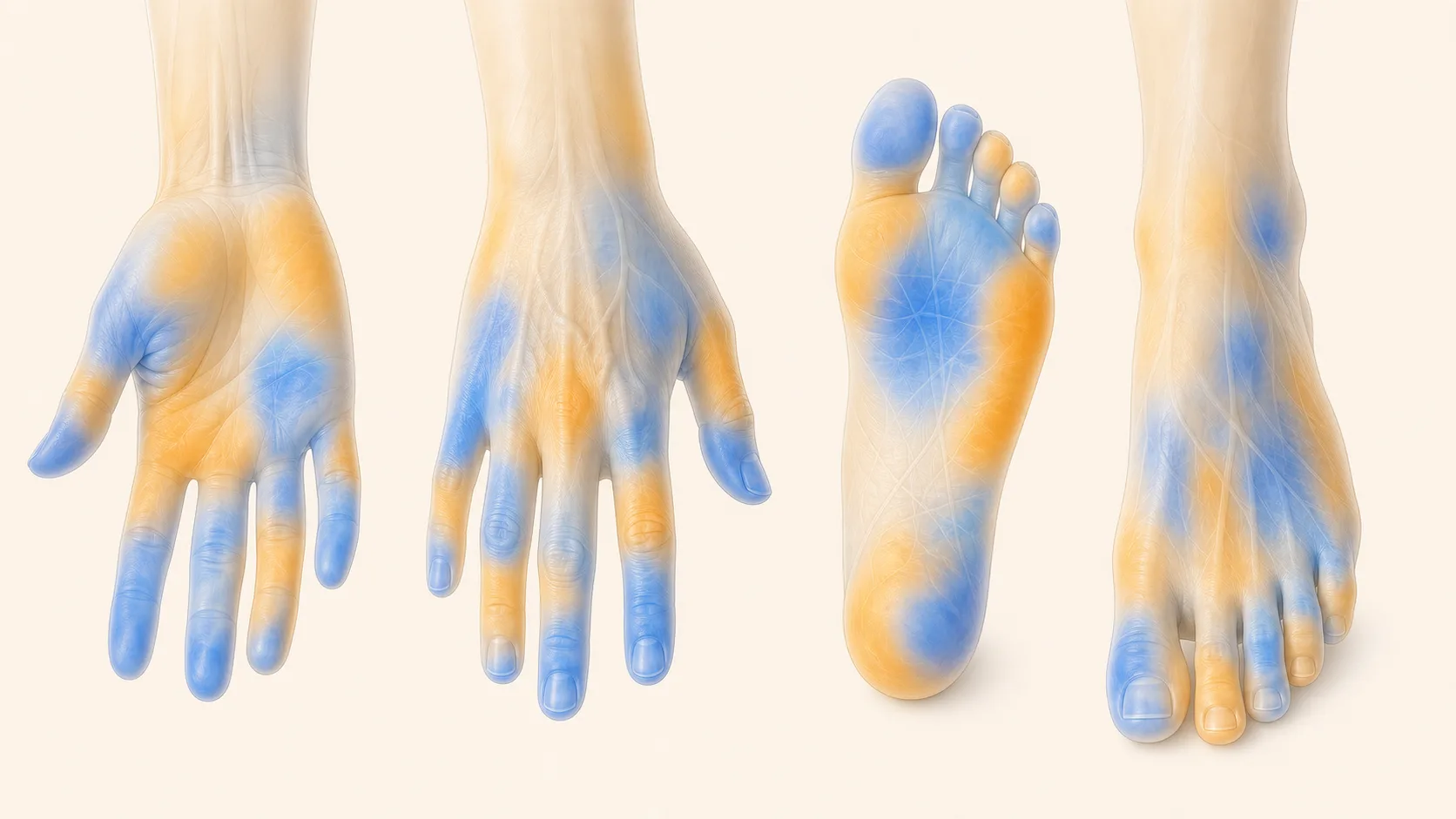
上熱下寒
Sangyeol-hahan (Upper Heat, Lower Cold): This refers to a state where heat and cold are imbalanced within the body, with the upper part (face, chest) feeling hot and the lower part (hands, feet, lower abdomen) feeling cold. This is the common framework for the conditions treated at Baekrokdam Heat and Cold Clinic.
What to check first
We identify when the symptoms began, situations that worsen them, and any accompanying discomfort.
What to distinguish together
We narrow down the possibilities by comparing similar-looking conditions with previous test results.
What to look for on this page
We provide guidance on major patterns, differential criteria, and the sequence of confirmation during the medical evaluation.
Korean medicine diagnosis looks at a different layer than hospital tests: it is not superior, but a different perspective.
Key information at a glance
- We understand Sangyeol-hahan, where the upper body is hot and the lower body is cold, as a single regulatory pattern.
- We provide guidance on the background of disrupted Suseung-hwagang (the circulation of cool energy upward and warm energy downward) and related branches such as the thyroid and autonomic nervous system.
Overview
Upper-body heat and lower-body cold(上熱下寒) is a Korean medicine expression referring to a state where the face flushes and the chest feels tight, while the hands, feet, or lower abdomen are actually cold. The upper (上) is hot (熱) and the lower (下) is cold (寒) literally means an imbalance where heat in the body is concentrated only at the top and does not circulate evenly to the bottom.
It is characterized by feeling both heat and cold simultaneously within one body, for example, wanting to cool the burning face with cold water while needing to wear socks because the hands and feet are freezing. The difficulty of this condition is that cooling the heat makes the lower body colder, and warming the lower body worsens the upper heat, making it hard to treat only one side.
This is closer to a symptom pattern that can commonly appear in various diseases rather than being a single diagnosis. Baekrokdam HanyeolClinic first identifies the diseases that may be the actual cause, Heat sensationand cold sensationand examines the affected areas, timing, and accompanying symptoms.
Why the face is hot and the feet are cold
In Korean medicine, the Yang energy of the kidneys (腎陽) moves from bottom to top, and the Fire of the heart (心火) is considered normal when they move up and down to achieve balance (Suseung-hwagang, the ascending of cool energy and descending of warm energy). This is a circulation where warm energy from below rises to warm the upper body, and hot energy from above descends to warm the lower body, as water and fire circulate. When this circulation is blocked, a condition called Sangyeol-hahan occurs, where heat remains in the upper body and cold accumulates in the lower body.
What blocks this circulation? When Qi (氣) clumps in the chest due to stress, or when the Yang energy of the Kidney (腎) that warms the lower body is insufficient, or when body fluids (陰) dry up and deficiency heat rises upward, the ascending and descending movement between the upper and lower body is severed. In actual clinical practice, this pattern is frequently observed alongside diseases involved in body temperature regulation itself, such as thyroid dysfunction or autonomic dysregulation.
Once you understand the principle of this circulation, you will see common misconceptions about Sangyeol-hahan in a new light.
Common Misconceptions
"Since heat rises upward, I must have a heat-prone constitution."
Sangyeol-hahan is often not a matter of having excessive heat, but a problem of 'distribution' where heat gathers only at the top and cannot descend. The fact that the lower body is cold is actually the key clue; therefore, it cannot be resolved simply by cooling down the heat.
"Cool the heat in the face and warm the cold in the hands and feet."
Because the upper and lower bodies are intertwined in a single circulation, treating only one side may cause the other to become more unbalanced. Cooling the heat can sometimes deepen the coldness of the lower body, necessitating an approach that tunes both the upper and lower body together.
"I just need to be diagnosed and treated for a disease called Sangyeol-hahan syndrome."
Sangyeol-hahan is not a specific disease name, but a framework referring to a 'state' that appears in various diseases. In reality, specific causative diseases such as thyroid disorders or autonomic dysregulation must be examined together.
The question of which disease caused the Sangyeol-hahan comes next. In the guidance below, you can proceed to the pattern identification of the actual causative diseases.
Frequently Asked Questions about Sangyeol-hahan
Can I receive tests under the disease name Sangyeol-hahan syndrome?
Sangyeol-hahan is not a specific disease name, but a Korean medicine framework referring to a 'state' where heat and cold within the body are misaligned between the upper and lower body. In reality, specific causative diseases such as thyroid disorders or autonomic dysregulation must be examined together.
From the perspective of heat and cold, this is viewed as a process where the temperature imbalance between the upper and lower body accumulates.
- Accumulation of causes for upper and lower body temperature regulation issues
- The body's regulatory functions cannot keep up
- This is seen as manifesting as symptoms such as upper-body heat and lower-body cold
The process of verification during medical evaluation
Now, we verify when and how your symptoms change
Since the way discomfort manifests can differ even within the same diagnosis, we review existing test results alongside the progression of symptoms.
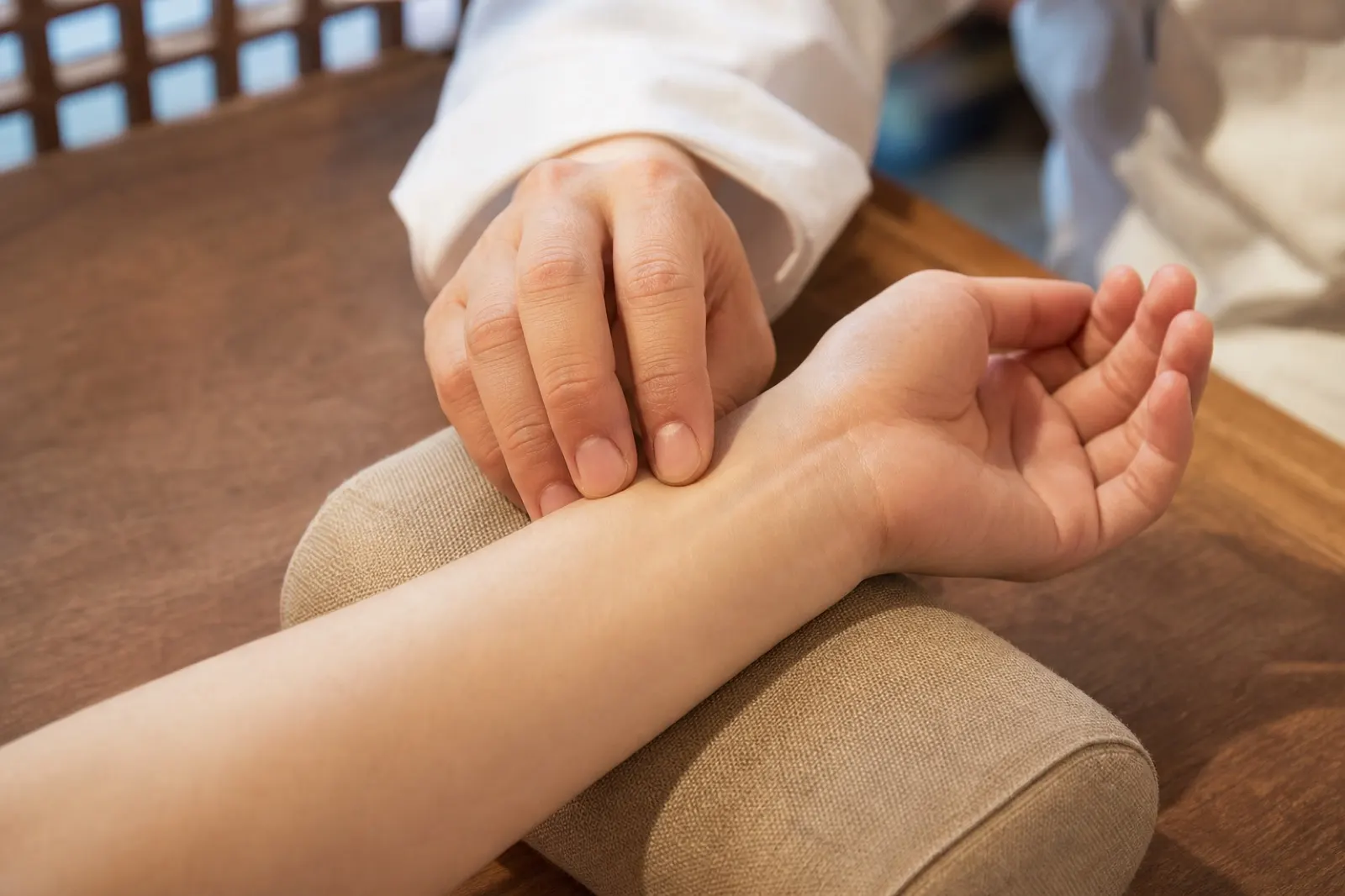
Pattern Identification (Byeon-jeung)
Symptoms are verified in detail through pulse diagnosis and medical interview
Through pulse diagnosis and patient consultation, we identify the tendency toward upper-body heat and lower-body cold and the accompanying patterns, and then explain the approach best suited to the current condition.
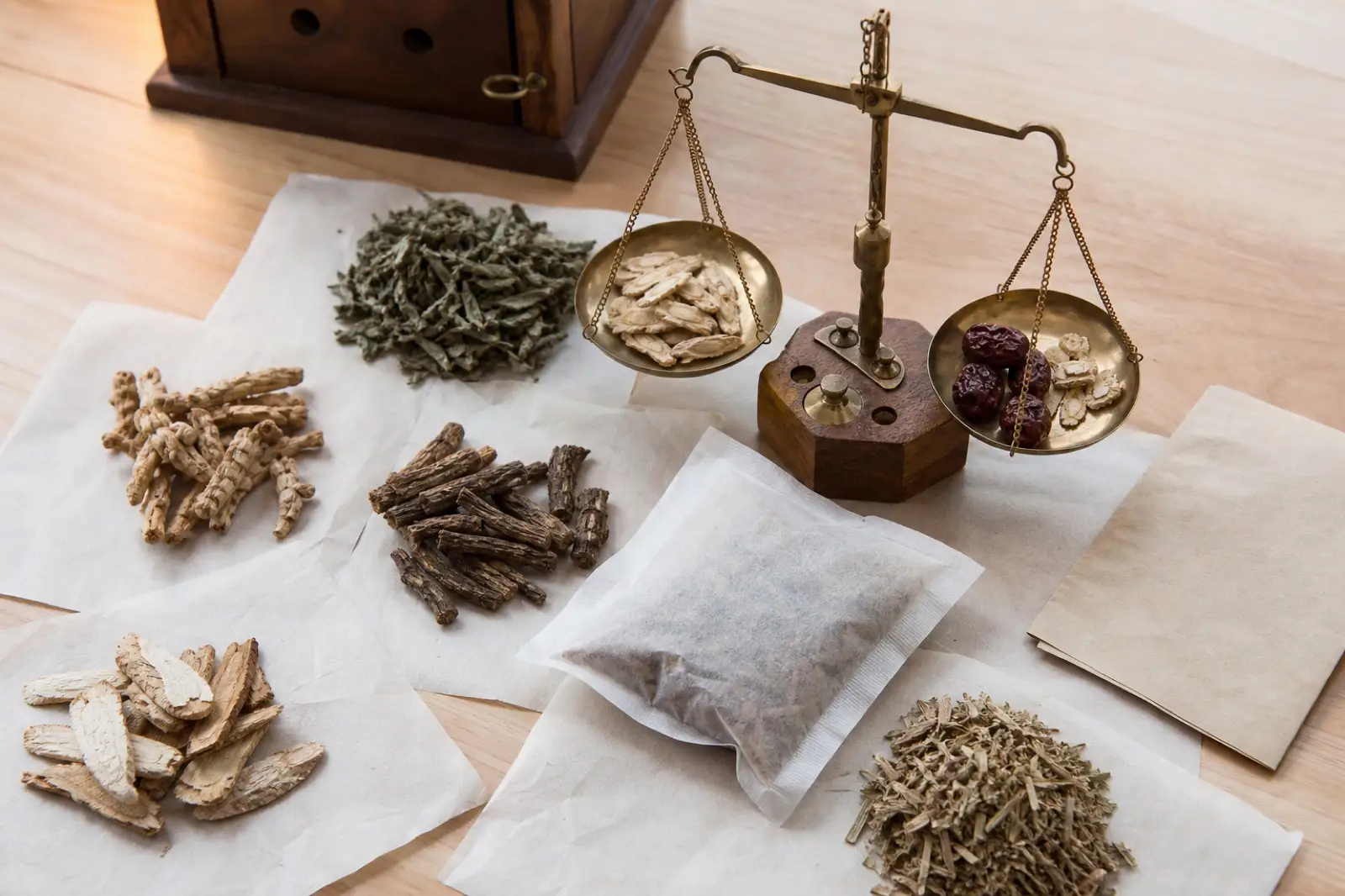
The prescription direction is determined, and changes after administration are verified
Based on the findings from the medical interview and examination, the prescription direction is explained, and the same director oversees everything from preparation to the changes after administration.
 Medical and Content Review
 Baekrokdam's medical standards
Sangyeol-hahan: Listening to the progression before the name
We identify when heat in the upper body and coldness in the extremities alternate, and examine the timing in relation to sleep, digestion, and stress. Since the way the body generates and distributes heat varies even for the same diagnosis, we link the patterns identified through pulse diagnosis, tongue diagnosis, and patient interviews to the herbal medicine prescription and the monitoring of progress.
"For discomfort that cannot be explained by test results alone, we trace back through the symptoms starting from when they first began."
- Graduated from Kyung Hee University College of Korean Medicine
- Chief Director of Baekrokdam Korean Medicine Clinic
Before Your Consultation
Please make a note of the times when the temperature differs between the upper and lower body, changes in throbbing, sweating, digestion, and sleep, as well as any previous test results.
During Your First Visit
Rather than concluding with a single symptom name, we categorize the onset, aggravating factors, and accompanying symptoms based on the patterns of cold and heat.
Once Treatment Begins
Prescriptions are adjusted based not only on the intensity of discomfort but also on the frequency, recovery time, and changes observed in your daily life.