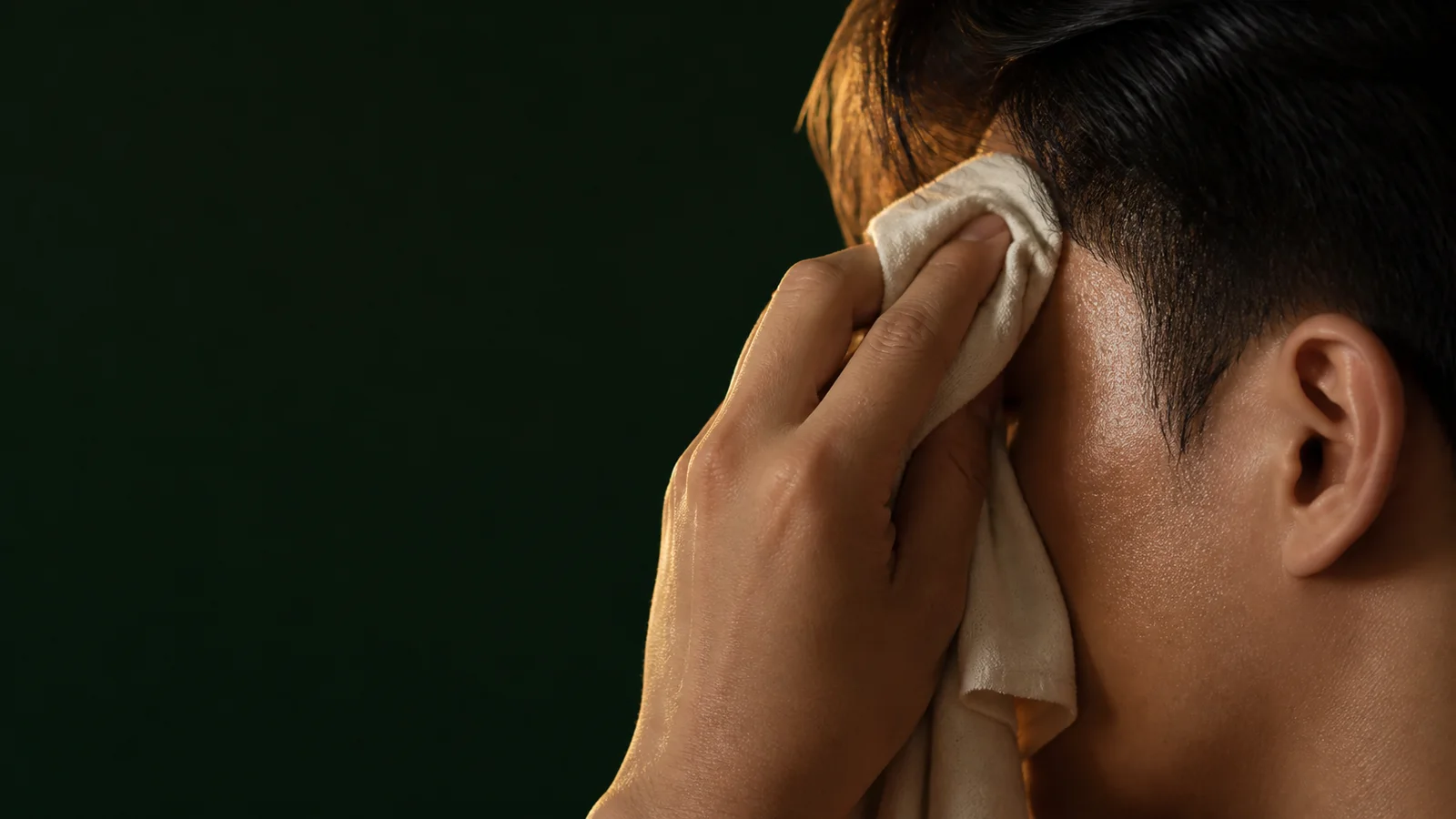
顔面紅潮 · Facial Flushing
When your face suddenly feels hot and turns red, we provide guidance on the patterns of facial flushing, potential causes to check, such as menopause, thyroid issues, or skin diseases, and the items evaluated during a medical consultation.
What to check first
We identify when the symptoms began, situations that worsen them, and any accompanying discomfort.
What to distinguish together
We narrow down the possibilities by comparing similar-looking conditions with previous test results.
What to look for on this page
We provide guidance on major patterns, differential criteria, and the sequence of confirmation during the medical evaluation.
General examinations check blood pressure, thyroid, and skin (rosacea) levels. These symptoms may be due to the rise of Gan-hwa (Liver Fire) or deficiency heat caused by Eum-heo (Yin Deficiency), which are evaluated through pattern identification.
Korean medicine diagnosis looks at a different layer than hospital tests: it is not superior, but a different perspective.
Key information at a glance
- Examine the background of the heat sensation by dividing the pattern identification into Gan-hwa, Eum-heo, etc.
- Differentiate from hypertension, hyperthyroidism, rosacea, and menopausal syndrome
- Conduct a medical interview regarding symptom patterns, constitution, and lifestyle factors along with pulse and abdominal diagnosis
We look beyond the tests to identify the root cause of your specific case.
Overview
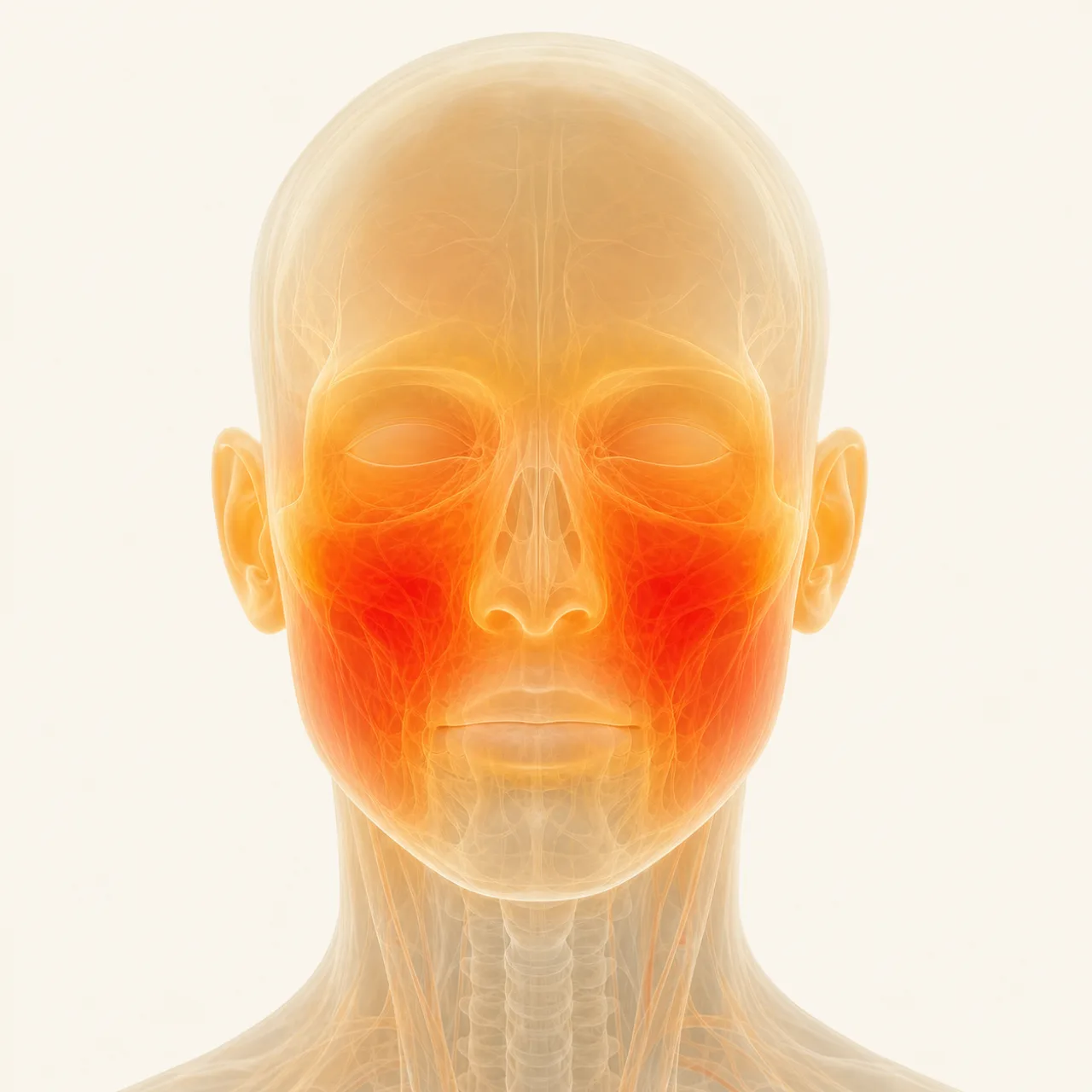
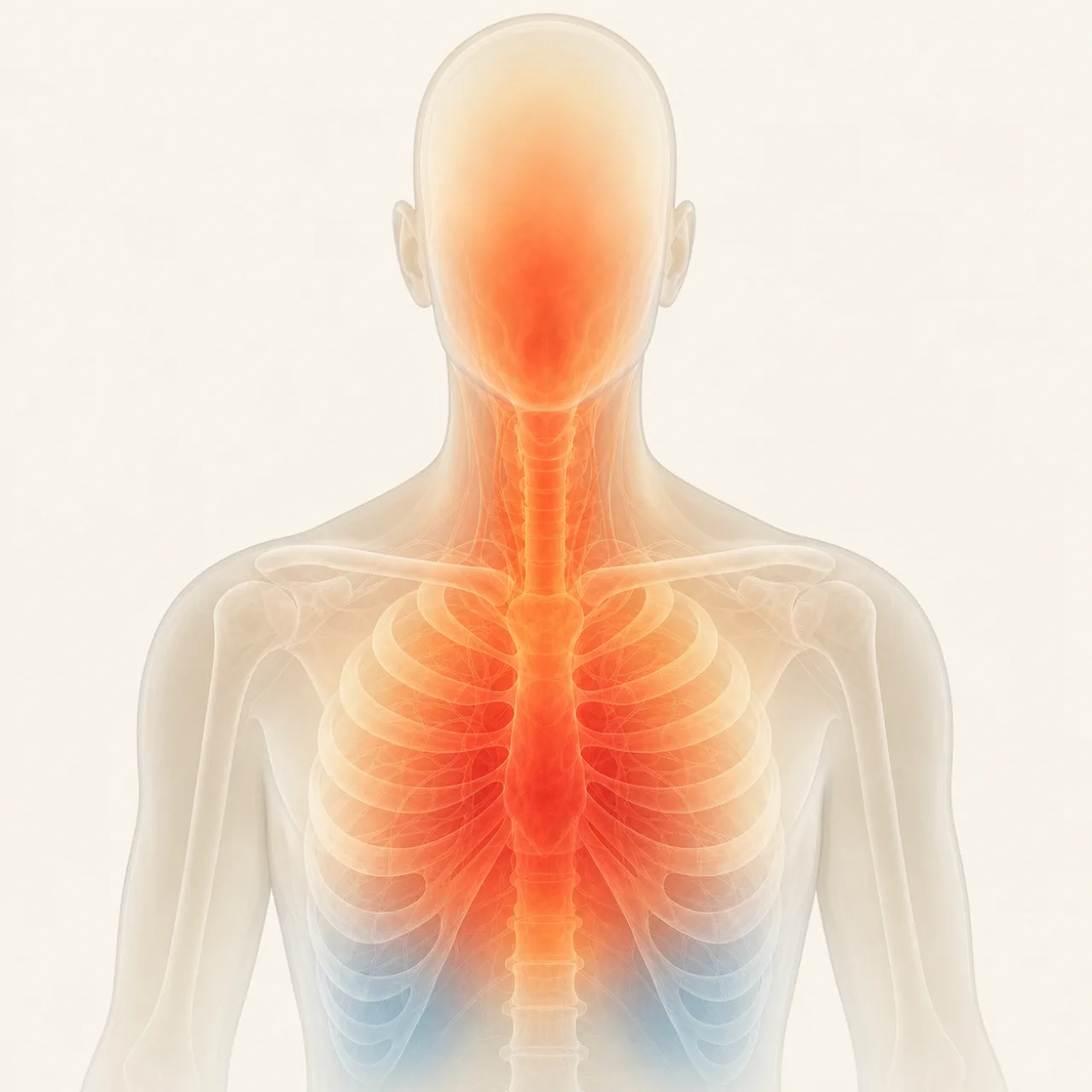
Facial flushing· Face Heat sensationis a symptom where heat suddenly rises to the face and head, causing a burning sensation and redness. In Korean medicine, this is called Myeon-yeol (面熱) or Sang-yeol (上熱), and unlike systemic heat, it is characterized by heat concentrating in the upper body and face. Cases where the face is hot but the hands, feet, and lower body are conversely cold are considered Fevera part of this pattern. Upper-body heat and lower-body cold(上熱下寒)
The mechanism of this Sang-yeol is understood as the rise of Gan-hwa (liver fire) (肝火) or deficiency heat caused by Eum-heo (yin deficiency) (陰虛). It is viewed as heat generated from the stagnation of Qi due to stress and tension, or heat rising due to a lack of Jin-aek (body fluids) (陰). While there are often no distinct abnormalities in blood pressure, thyroid, or skin (rosacea) tests, it is important to first rule out conditions such as hypertension and hyperthyroidism through medical examinations.
Why specifically the face? Hwa (fire) (火) naturally has a property of rising, so heat generated within the body floats up to the highest point, the face and head. In particular, the Gan (liver) (肝) is responsible for the flow of emotions and Qi; when Gan-gi (liver Qi) (肝氣) is blocked due to stress and turns into fire, this fire surges to the face, making the cheeks and ears flush red. The experience of the face flushing suddenly when nervous or angry is connected to this flow.
Meanwhile, sangyeolhahan (upper heat, lower cold), where the face is hot but the hands and feet are cold (上熱下寒), where the face is hot but the hands and feet are cold, is an imbalance where heat rises upward while Yang-gi (vital energy) (陽氣) fails to reach the lower body. Simply cooling the heat unconditionally may worsen the coldness in the lower body, so a perspective that addresses both the upper heat and lower cold is necessary. The Baekrokdam Heat-Cold Clinic examines this imbalance of Sang-ha (upper and lower) (上下) through pattern identification.
Then, where does the heat rising to my face come from? Even for the same facial flushing, the approach differs depending on whether it is Gan-hwa or Eum-heo. Therefore, we look closer into the single symptom of 'facial flushing'.
Different types of the same symptom
Gan-hwa Type (肝火)
Gan (liver) (肝) fire surges upward. Since the liver is connected to emotions and the eyes, the face flushes suddenly and the eyes become dry or bloodshot when nervous or angry, and symptoms worsen significantly in stressful or social situations. The timing of the facial flushing aligns closely with emotions.
The approach is to lower the surging fire.
Eum-heo Type (陰虛)
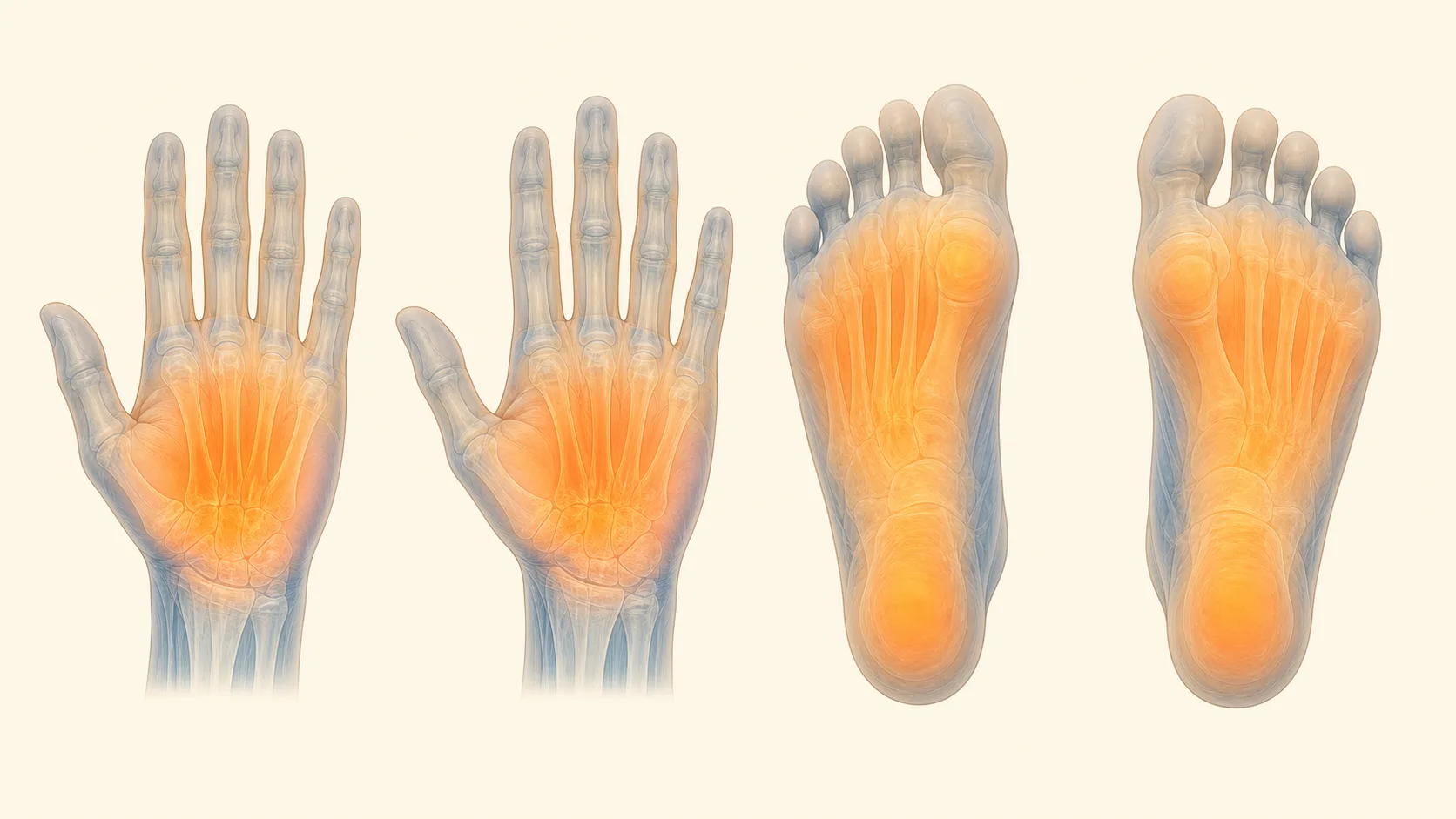
This type occurs when the body's fluids (陰) is deficient, causing deficiency heat to rise. Heat sensations begin around menopause, worsen in the evening or at night, and are accompanied by dry mouth, insomnia, heart palpitations, and heat in the palms and soles. It tends to persist subtly regardless of emotion.
The approach is to supplement deficient Yin to calm deficiency heat.
Since the two types can overlap, we evaluate the proportion by comprehensively considering constitution, accompanying symptoms, and lifestyle patterns. In particular, if there is accompanying coldness in the lower body, we examine it further from the perspective of Sangyeol-Hahan (heat in the upper body and cold in the lower body).
When the source of heat is categorized this way, the coping methods that were previously taken for granted look a bit different. Let's start by addressing common misconceptions encountered in the clinic.
Common Misconceptions
"Since the face is red, the blood pressure must be high."
While hypertension can be accompanied by facial flushing, there are far more cases where the face frequently flushes even when blood pressure is normal. First, verify this with a blood pressure measurement; if it is normal, there is room to approach it from the perspective of heat.
"Since there is heat, it just needs to be cooled down unconditionally."
In cases like Sangyeol-Hahan, where the face is hot but the hands and feet are cold, simply cooling the heat can worsen the coldness in the lower body. Both the heat above and the cold below must be considered together; attempting to solve it only with cold foods or washing the face with cold water can actually disrupt the balance.
"Facial flushing is simply a dermatological issue."
While there are cases where it is a problem with the skin blood vessels themselves, such as rosacea, if upper-body heat recurs without clear skin abnormalities in tests, it may be a problem of heat balance within the body. Dermatological differentiation and Korean medicine pattern identification are not mutually exclusive.
"It's just a natural part of aging, so there's nothing that can be done."
Many people leave menopausal heat sensations untreated, viewing them only as natural aging, but this is also a signal from the body that deficiency heat is rising as Yin (陰) decreases. The direction of management can be determined based on constitution and accompanying symptoms.
It is also necessary to distinguish it from other diseases that are easy to confuse due to similar symptoms. Below are the clues to identify those differences.
Points to verify even if symptoms seem similar
Since upper-body heat can be caused by multiple overlapping factors, it is important to first rule out the following:
Hypertension
Initial verification via blood pressure measurement is required.
Hyperthyroidism
Since excessive metabolism often causes systemic heat sensations and sweating to appear together, it is distinguished by thyroid levels.
Rosacea
A dermatological condition where the skin reddens due to problems with the skin blood vessels themselves; it is differentiated by whether lower-body coldness, such as Sangyeol-Hahan, is present.
Menopausal Syndrome
Upper-body heat due to hormonal changes, which frequently overlaps with facial flushing.
Therefore, in actual clinical practice, we analyze pulse diagnosis, abdominal diagnosis, and lifestyle patterns together.
How this is evaluated during a medical consultation
We evaluate the tendency toward Gan-hwa (liver fire) or Yin deficiency by comprehensively considering constitution, accompanying symptoms, and lifestyle patterns.
- Understanding symptom patterns: when it worsens, relationship with emotions, and whether it is accompanied by a cold sensation in the lower body
- Constitution and Lifestyle Consultation (問診): whether in menopause, stress, sleep, alcohol and dietary habits
- Pulse Diagnosis (脈診) and Abdominal Diagnosis (腹診): we use traditional diagnostic methods to examine the degree of Liver Fire or Yin Deficiency tendencies
- If there are no clear abnormalities in blood pressure, thyroid, or skin tests, we narrow down the cause through Korean medicine pattern identification
Once these types are organized, we will determine the next direction together based on your constitution and any remaining symptoms that were not revealed by tests alone.
Frequently Asked Questions about Facial Flushing
Could facial flushing be caused by high blood pressure?
Since high blood pressure can also be accompanied by facial flushing, it is important to first rule it out through blood pressure and thyroid tests. If tests are normal but heat sensations in the upper body recur, we can examine it from the perspective of Liver Fire or Yin Deficiency.
From the perspective of heat and cold, this is viewed as a process where the causes of heat accumulation build up.
- Accumulation of causes that lead to heat concentration
- The body's regulatory functions cannot keep up
- This is seen as manifesting through symptoms such as upward heat or dryness
The process of verification during medical evaluation
Now, we verify when and how your symptoms change
Since the way discomfort manifests can differ even within the same diagnosis, we review existing test results alongside the progression of symptoms.
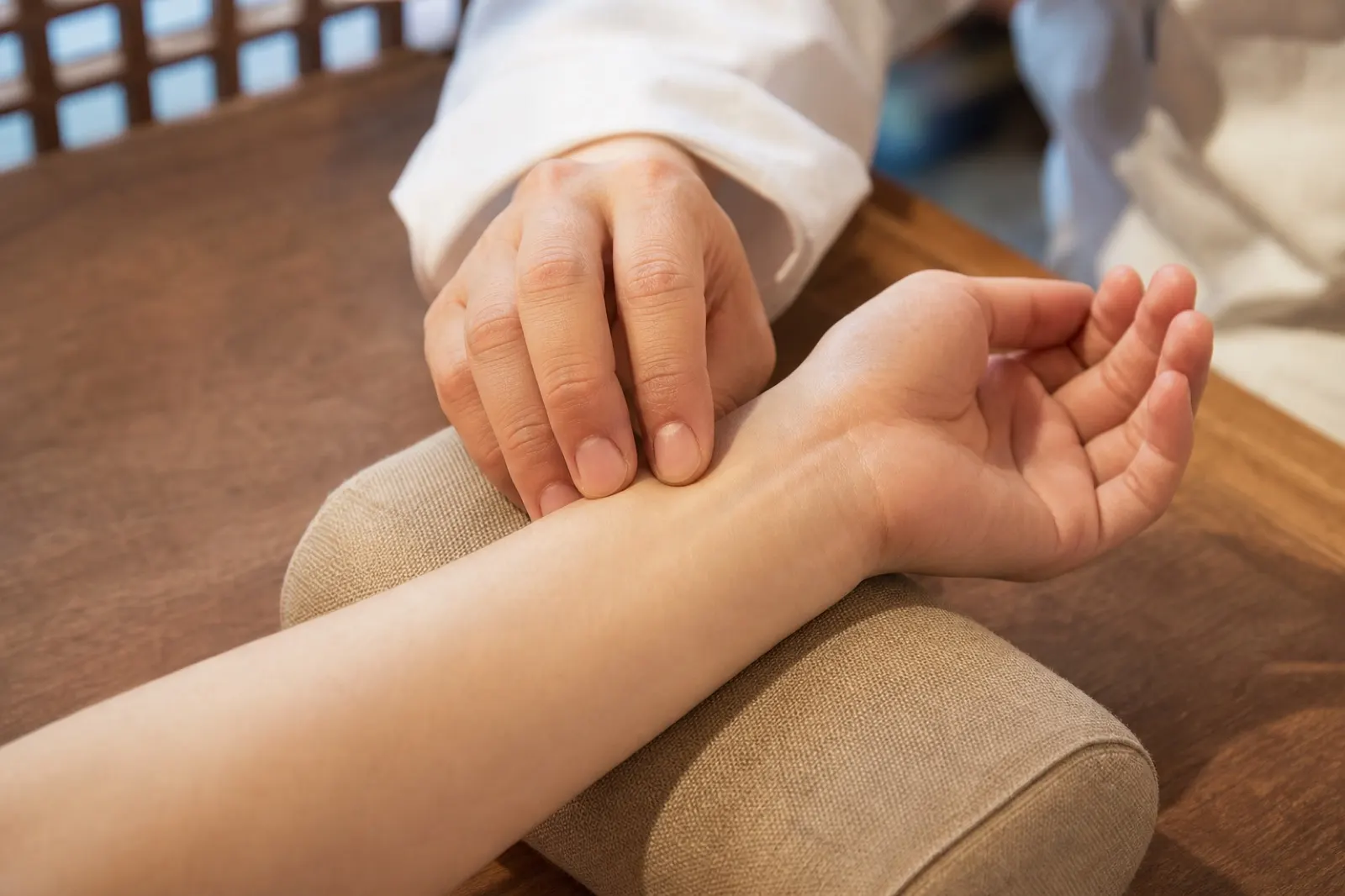
Pattern Identification (Byeon-jeung)
Symptoms are verified in detail through pulse diagnosis and medical interview
We use pulse diagnosis and patient interviews to identify heat syndrome tendencies and accompanying patterns, then explain the approach best suited to your current condition.
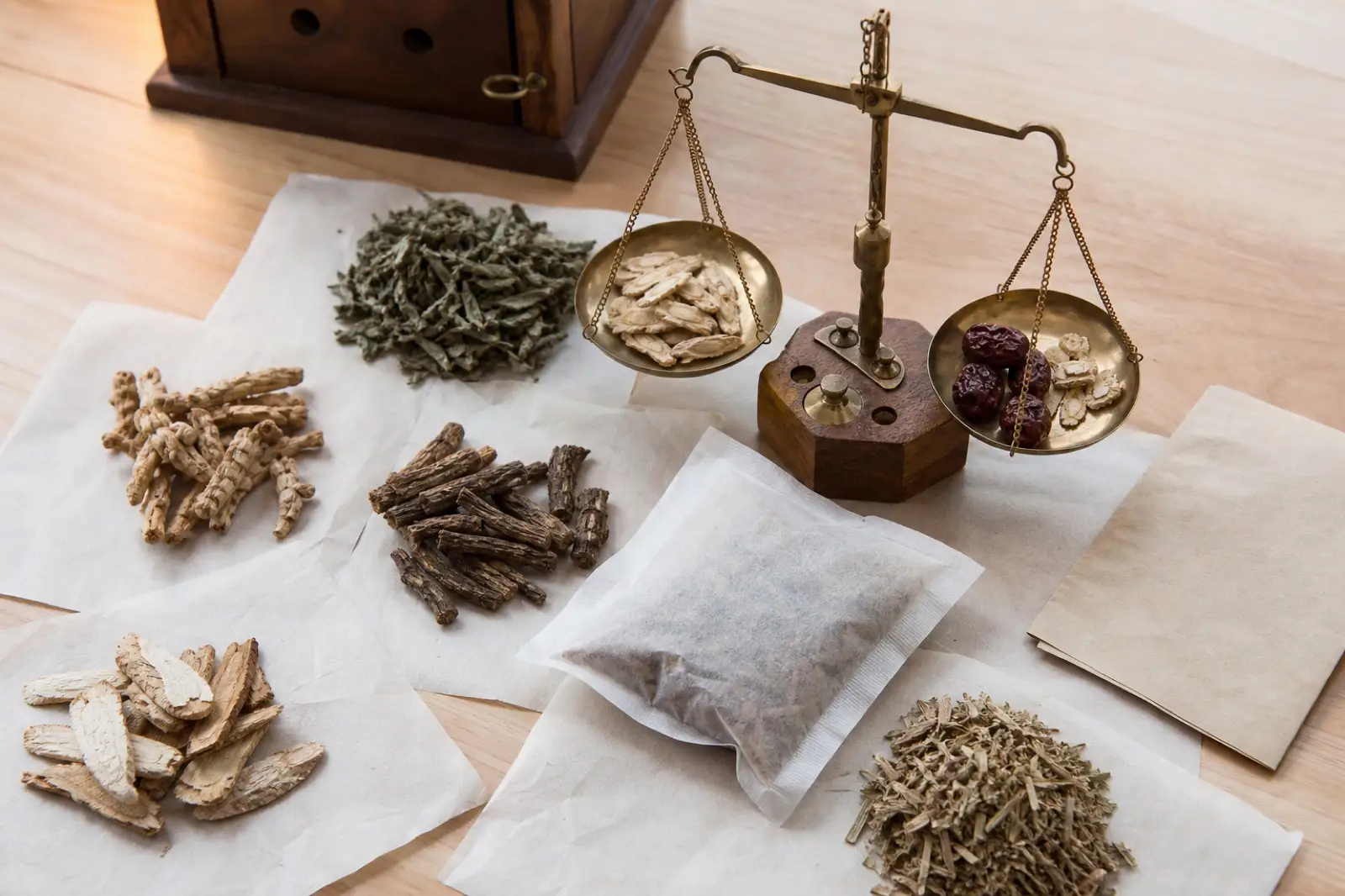
The prescription direction is determined, and changes after administration are verified
Based on the findings from the medical interview and examination, the prescription direction is explained, and the same director oversees everything from preparation to the changes after administration.
 Medical and Content Review
 Baekrokdam's medical standards
Facial Flushing: We listen to the progression before the name
We check the timing and area where the feeling of heat begins, along with changes in sweating, thirst, sleep, and nervousness. Even with the same diagnosis, the way the body produces and distributes heat varies; therefore, the categories identified through pulse, tongue, and patient interviews are linked to the Korean herbal medicine prescription and progress monitoring.
"For discomfort that cannot be explained by test results alone, we trace back through the symptoms starting from when they first began."
- Graduated from Kyung Hee University College of Korean Medicine
- Chief Director of Baekrokdam Korean Medicine Clinic
Before Your Consultation
Please make a note of the time when heat rises, its relationship with meals, sleep, and nervousness, as well as any recent tests and medications you are taking.
During Your First Visit
Rather than concluding with a single symptom name, we categorize the onset, aggravating factors, and accompanying symptoms based on the patterns of cold and heat.
Once Treatment Begins
Prescriptions are adjusted based not only on the intensity of discomfort but also on the frequency, recovery time, and changes observed in your daily life.