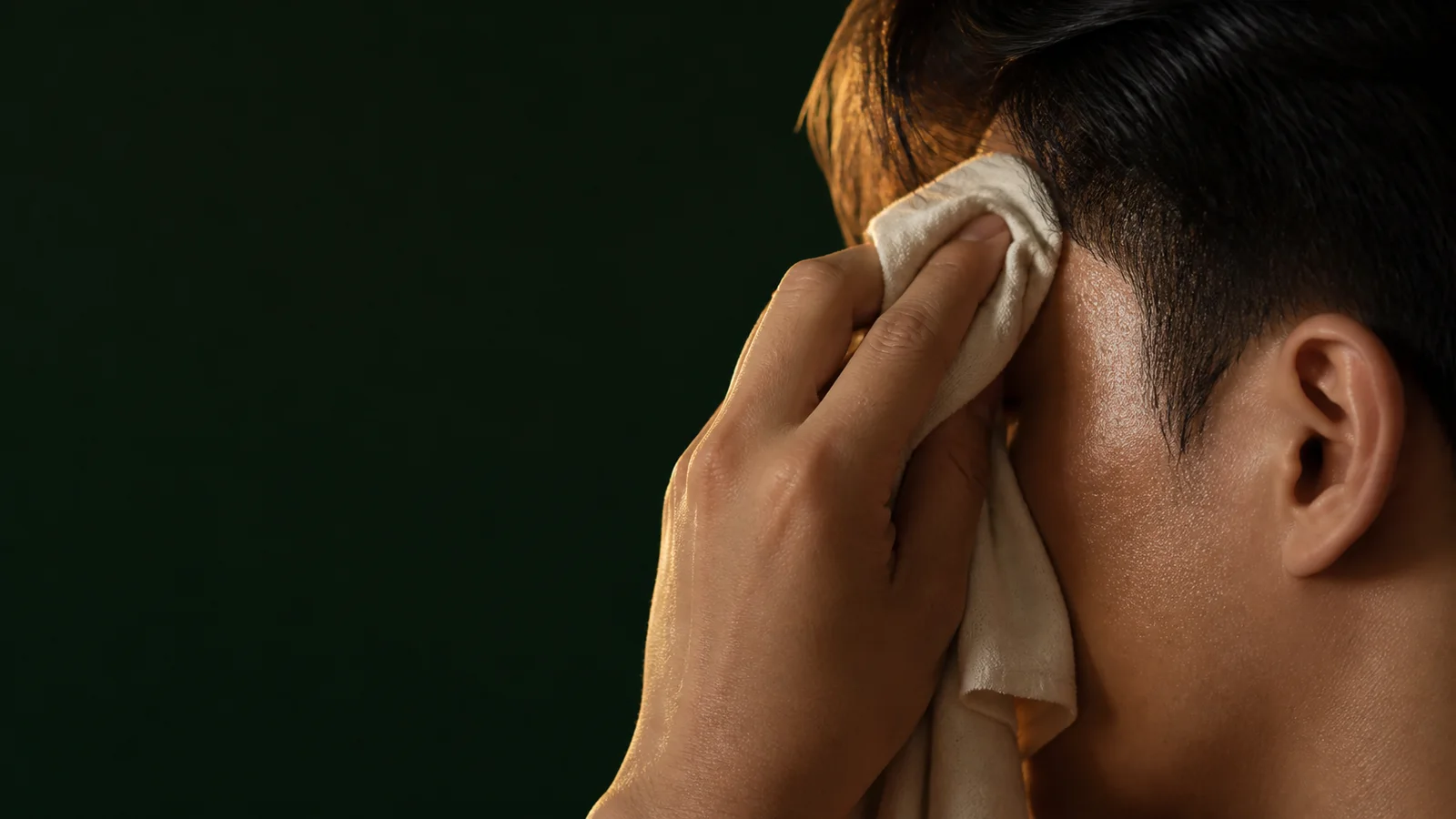
背熱症
When the back feels particularly hot or burning, we provide guidance on the patterns of symptoms, related conditions to check, and items examined during a medical evaluation. We examine recurring heat sensations in the back from the perspective of circulation and overall body condition.
What to check first
We identify when the symptoms began, situations that worsen them, and any accompanying discomfort.
What to distinguish together
We narrow down the possibilities by comparing similar-looking conditions with previous test results.
What to look for on this page
We provide guidance on major patterns, differential criteria, and the sequence of confirmation during the medical evaluation.
General examinations check for musculoskeletal abnormalities. This symptom may be a state where heat accumulates along the Governor Vessel (督脈) and Bladder Meridian (膀胱經) and cannot dissipate; this is evaluated through pattern identification (Byeon-jeung).
Korean medicine diagnosis looks at a different layer than hospital tests: it is not superior, but a different perspective.
Key information at a glance
- Pattern identification is divided into four categories: Yin deficiency with internal heat, Liver-fire ascending, Damp-heat, and Qi stagnation transforming into fire
- Differential diagnosis is performed to distinguish this from myofascial pain syndrome, prodromal shingles, febrile illnesses, and menopausal hot flashes
- The background of heat sensations limited to the back and shoulder blades is confirmed through medical interviews
We look beyond the tests to identify the root cause of your specific case.
Overview
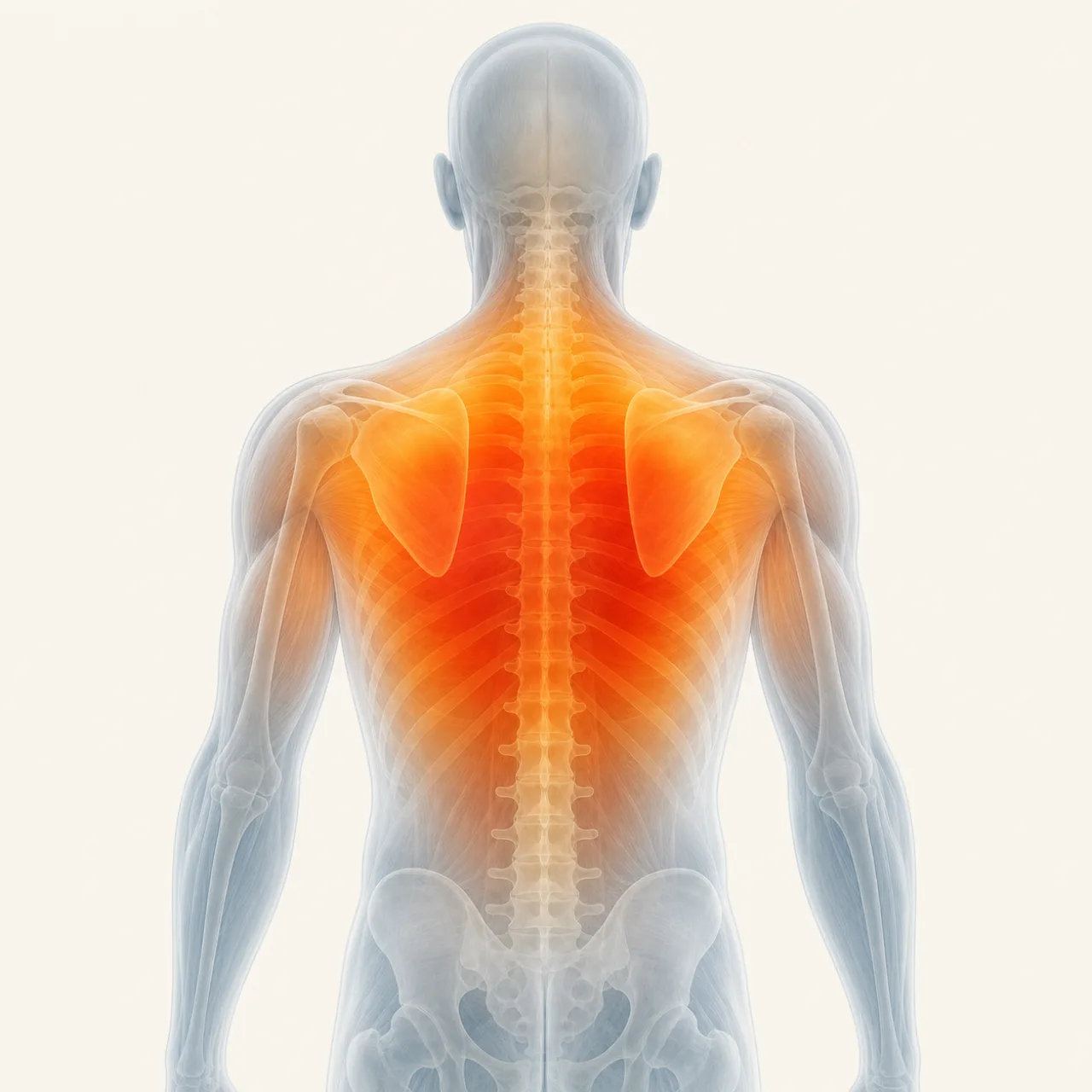
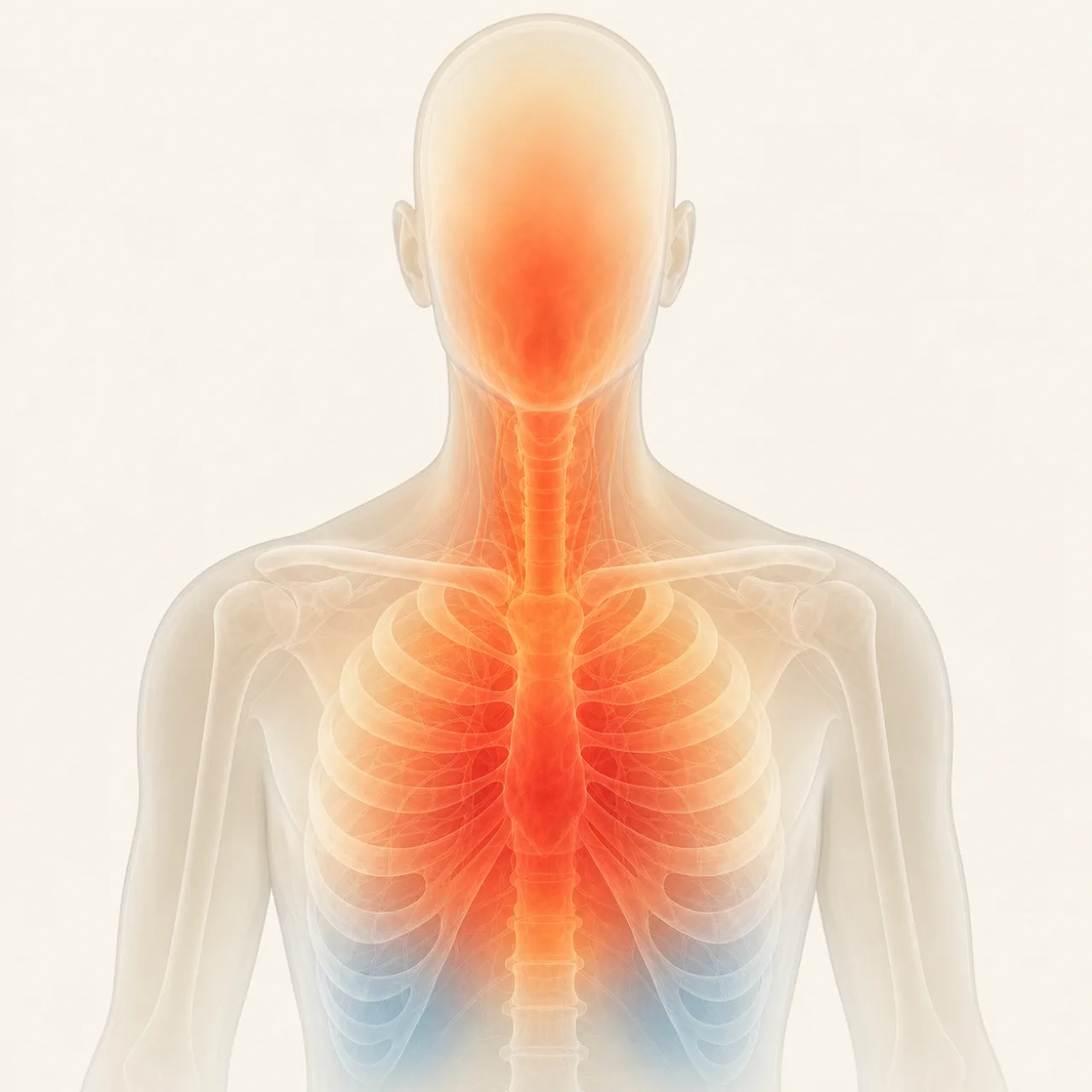
BackHeat Syndrome(背熱症) is a symptom where other areas feel fine, but the back, especially between the shoulder blades or the upper back, feels exceptionally hot and burning Heat sensationis felt. Many patients describe it as the back feeling stiflingly hot when covered with a blanket, or feeling the need to lean their back against a wall to cool it down. It is characterized by being distinctly localized, similar to the old expression of a palm-sized area feeling as if it were held over a fire.
In Korean medicine, this is understood as a state where heat (督脈Governing Vessel (Du Mai)膀胱經Bladder Meridian熱) accumulates in the back and cannot be properly dispersed along the Governing Vessel (督脈) and Bladder Meridian. The Governing Vessel (膀胱經) runs vertically down the center of the back and serves as the pathway that oversees the Yang energy of the entire body, while the Bladder Meridian (
) flows along both sides and connects to various internal organs. When heat becomes biased toward these two meridians and their connected organs, specific areas of the back heat up, like a wall where sunlight hits only one spot.腹This differs in location and cause from abdominal heat felt in the stomach ( Pattern Identification) and is first distinguished through pattern identification, as the two are easily confused due to similar names. In 'Baeyeol-jeung' (back heat syndrome), 'Bae (背)' is a Chinese character meaning 'back,' referring to heat in the back rather than the stomach.
Heat in the back may be a simple muscle or skin issue, or it may be a signal of an imbalance of internal heat. Therefore, we examine whether it is related to posture and muscles, or intertwined with systemic heat sensations, sleep, and stress.
Then, what is the cause of the heat in my back? Even within the same back heat syndrome, the underlying cause varies from person to person. Therefore, we divide the single symptom of 'back heat syndrome' into four types for examination.
Different types of the same symptom
It is divided into four categories based on the background of the heat in the back.
Yin Deficiency with Internal Heat Type (陰虛內熱)
This type occurs when the body's fluids (陰) are depleted, causing relative deficiency heat (虛熱) to arise. The heat in the back worsens in the afternoon and evening, accompanied by night sweats, heat in the palms and soles, and dry mouth.
The approach is to replenish the deficient Yin to Deficiency heatis to soothe and reduce it.
Liver-Fire Inflammation Type (肝火上炎)
A type where stress causes the energy (Qi) of the liver (肝)'s fire ("火) surges upward, causing heat to spread to the upper back and shoulders. This type is characterized by a tendency to get angry easily, facial flushing, a bitter taste in the mouth, and increased heat sensations in the back when tense or angry.
The approach is to bring down the surging Liver-Fire.
Damp-Heat Warmth Type (濕熱蘊蒸)
Spleen and Stomach ("脾胃)'s dampness ("濕) and heat ("熱) clump together and steam ("蘊蒸) the back. The back feels hot and heavy, sweat is sticky, and symptoms tend to worsen after consuming greasy, spicy foods or alcohol.
The approach is to bring down and cool the damp-heat accumulated in the back.
Qi-Stagnation Fire Type (氣鬱化火)
A type where energy (Qi) has been blocked for a long time and transformed into fire ("火). This is characterized by a feeling of tightness in the chest, frequent sighing, significant mood swings, and heat sensations that rise to the back inconsistently depending on the situation.
The approach is to release and circulate the blocked Qi while cooling the heat.
When categorized by these types, several things previously taken for granted may look different. Let's start by addressing some common misconceptions encountered in the clinic.
Common Misconceptions
"Baeyeol-jeung is a condition where the back is hot."
The 'bae' in 'Baeyeol-jeung' ("背)' is a Chinese character meaning the back, so it refers to heat in the back ("腹), not heat in the abdomen. Although the names are similar and easily confused, the location and cause are entirely different symptoms.
"The heat in the back is just heat in the muscles."
Muscle tension or inflammation is often accompanied by stiffness or tenderness. If a burning heat sensation, as if the area were being heated by fire, repeats chronically in a specific area, it may be worth examining from the perspective of an imbalance of heat.
"You can just cool it down from time to time with cold water or a cool breeze."
While this may help temporarily, if the root cause is an imbalance of internal heat, such as Yin deficiency with internal heat or Qi stagnation transforming into fire, simply cooling the surface will lead to recurrence. The underlying cause must be examined.
"It is fine as long as it is just a feeling of heat, even if the back feels burning and blisters or rashes appear."
If heat or stinging sensations in the back are accompanied by band-shaped blisters or rashes, skin or neurological conditions such as shingles must be ruled out first. These accompanying symptoms should not be dismissed as simple heat sensations and require medical evaluation.
It is necessary to distinguish this from other conditions that cause similar discomfort in the back and are easily confused. The following are clues to help differentiate them.
Points to verify even if symptoms seem similar
Myofascial Pain Syndrome
Pain is reproduced when pressing specific trigger points, and the primary symptoms are stiffness or tightness rather than a feeling of heat. It is closely related to posture and muscle use.
Prodromal symptoms of shingles
Differentiation is necessary if stinging heat or pain first appears on one side of the back, followed by band-shaped blisters a few days later. If blisters or rashes are visible, related medical evaluation is required first.
Febrile diseases or menopausal hot flashes
If accompanied by systemic fever or a sudden surge of heat (flushing) toward the face and upper body, background factors such as infection, endocrine issues, or menopause must be examined first.
Simple skin irritation or burning sensation
These often appear temporarily only after wearing certain clothes, maintaining specific postures, or friction, and subside once the stimulus is gone; this differs from the course of chronic, recurring heat distribution disorders.
Therefore, during actual medical evaluation, the hot areas, timing, and accompanying signals are analyzed through inquiry, abdominal examination, and pulse diagnosis.
How this is evaluated during a medical consultation
Through inquiry (問診), we check the area of heat (upper back/upper waist/entire back), the timing of onset (afternoon, night, relationship with stress or meals), and accompanying symptoms (night sweats, insomnia, digestion, or mood swings). Through abdominal examination (腹診) and pulse diagnosis (脈診), and if necessary, Digital Infrared Thermal Imaging (DITI) is used as a reference for the temperature distribution of the back. However, the cause of the heat sensation or the pattern identification is not determined by a single thermal image alone. The heat sensation felt by the patient and the actual skin temperature may differ, and the time structure of when symptoms start and subside may be more important than the value at rest. If blisters, rashes, or systemic fever are present, underlying diseases are ruled out first through related tests.
Once the type is identified, we determine the cause of the concentrated heat in the back and decide on the subsequent management direction together.
Confirmed Details and Points for Further Review
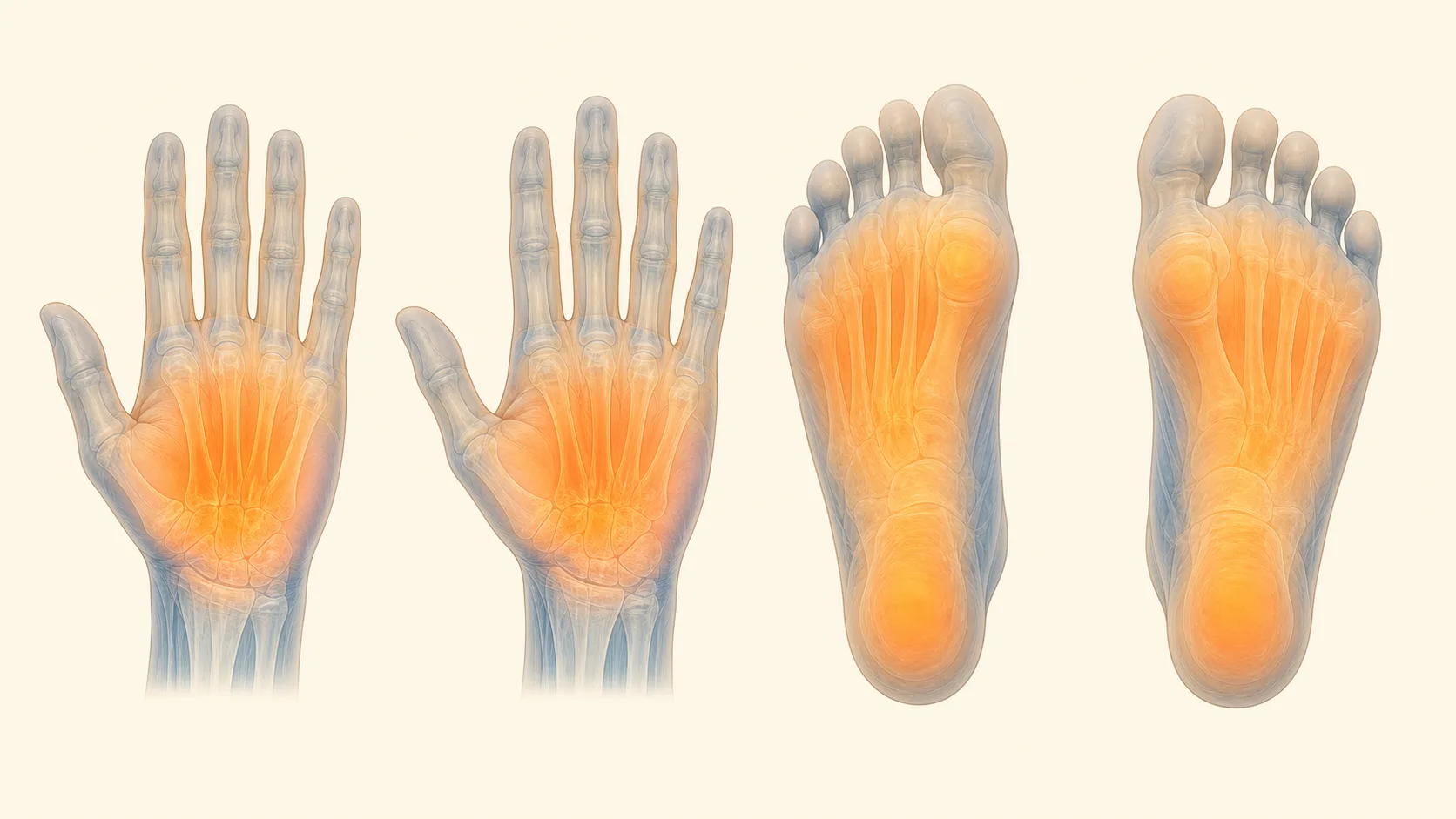
There is not yet sufficient evidence to define heat sensations in the back as a single independent disease or a single mechanism. Baekrokdam Research Commons (BRC) has released a research model that separately records the sensations felt by the patient, actual skin temperature, sensory thresholds, vascular responses, and the context of occurrence for cases where heat and cold sensations appear in different areas, such as heat in the back and coldness in the hands and feet. This research is not a paper proving the efficacy of thermal imaging or heat/cold pattern identification, but rather a critical synthesis for public review proposing what should be measured to distinguish between different explanations.
Frequently Asked Questions about Heat Distribution Disorders
Is Bae-yeol-jeung the same as having a hot stomach?
No. Bae-yeol-jeung refers to symptoms where the back, not the stomach, feels exceptionally hot and burning. The character 'Bae' (背) means the back, so it refers to a sensation of heat in the back rather than the stomach.
From the perspective of heat and cold, this is viewed as a process where the causes of heat accumulation build up.
- Accumulation of causes that lead to heat concentration
- The body's regulatory functions cannot keep up
- This is seen as manifesting through symptoms such as upward heat or dryness
The process of verification during medical evaluation
Now, we verify when and how your symptoms change
Since the way discomfort manifests can differ even within the same diagnosis, we review existing test results alongside the progression of symptoms.
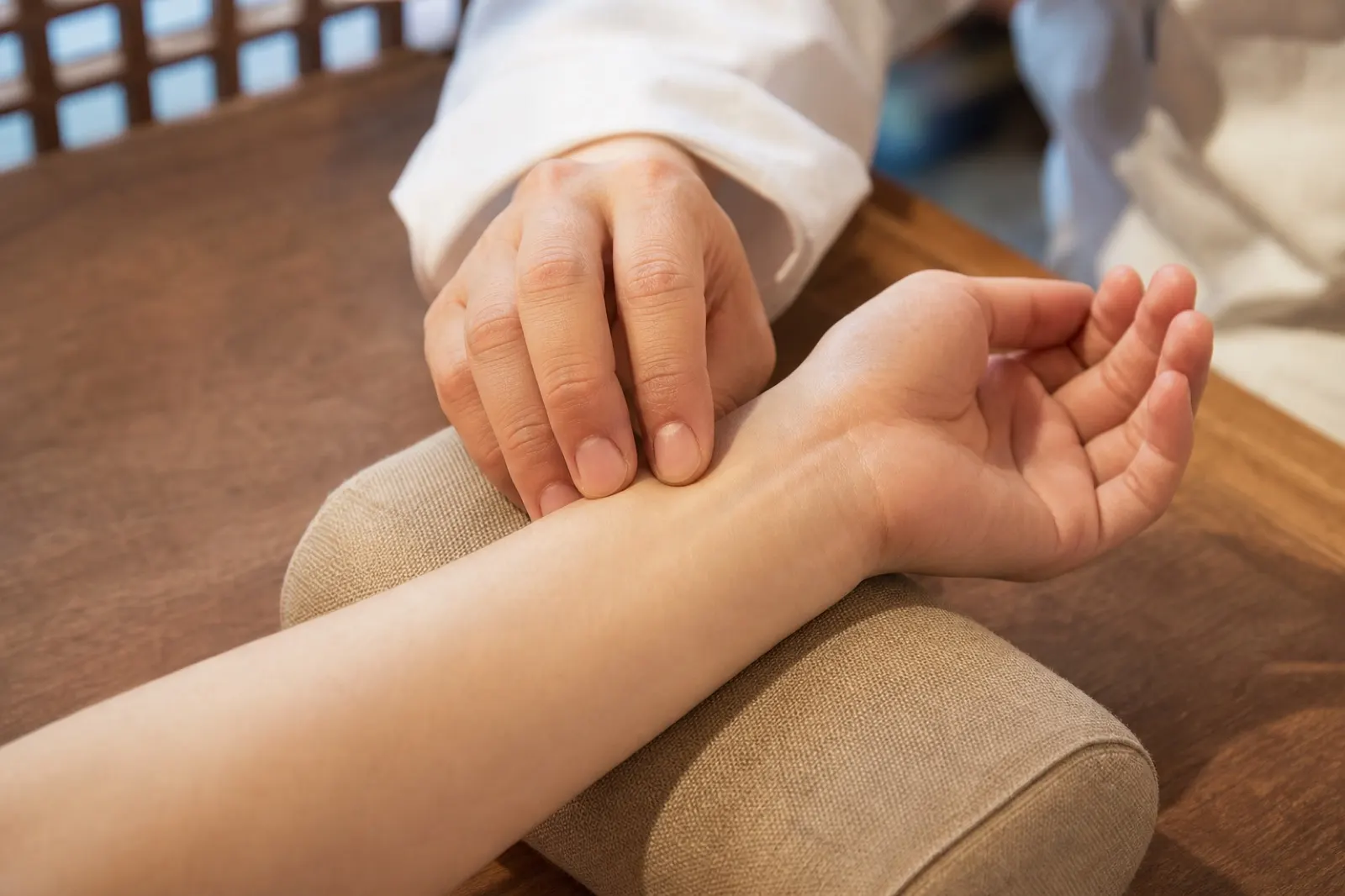
Pattern Identification (Byeon-jeung)
Symptoms are verified in detail through pulse diagnosis and medical interview
We use pulse diagnosis and patient interviews to identify heat syndrome tendencies and accompanying patterns, then explain the approach best suited to your current condition.
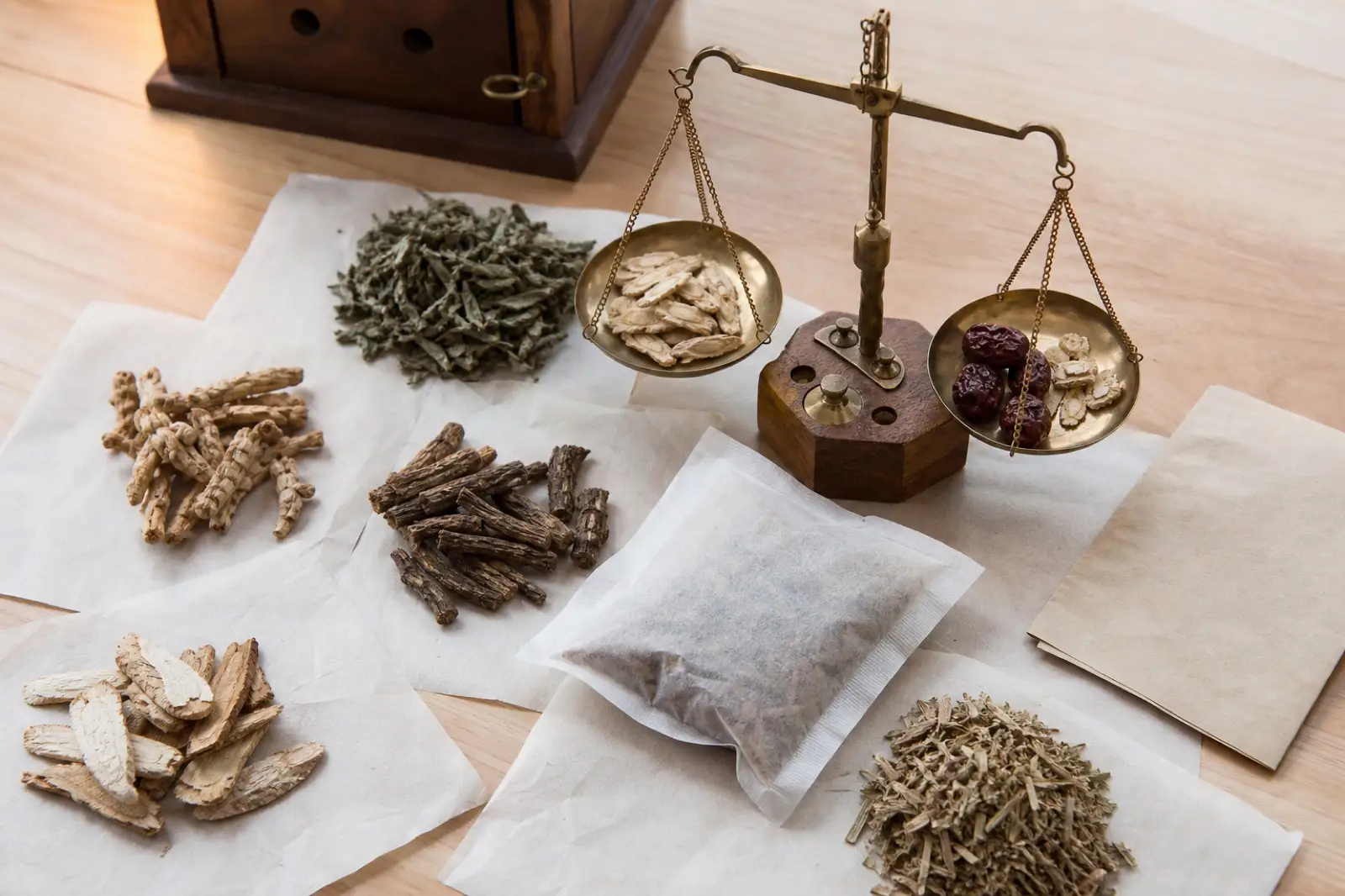
The prescription direction is determined, and changes after administration are verified
Based on the findings from the medical interview and examination, the prescription direction is explained, and the same director oversees everything from preparation to the changes after administration.
 Medical and Content Review
 Baekrokdam's medical standards
Bae-yeol-jeung: We listen to the progression of symptoms before the name of the condition
We check the timing and area where the feeling of heat begins, along with changes in sweating, thirst, sleep, and nervousness. Even with the same diagnosis, the way the body produces and distributes heat varies; therefore, the categories identified through pulse, tongue, and patient interviews are linked to the Korean herbal medicine prescription and progress monitoring.
"For discomfort that cannot be explained by test results alone, we trace back through the symptoms starting from when they first began."
- Graduated from Kyung Hee University College of Korean Medicine
- Chief Director of Baekrokdam Korean Medicine Clinic
Before Your Consultation
Please make a note of the time when heat rises, its relationship with meals, sleep, and nervousness, as well as any recent tests and medications you are taking.
During Your First Visit
Rather than concluding with a single symptom name, we categorize the onset, aggravating factors, and accompanying symptoms based on the patterns of cold and heat.
Once Treatment Begins
Prescriptions are adjusted based not only on the intensity of discomfort but also on the frequency, recovery time, and changes observed in your daily life.