
口腔灼熱感症候群 · Burning Mouth Syndrome
We provide information on the characteristics of Burning Mouth Syndrome, the causes to be identified through tests, and the items examined during medical evaluation when the tongue, lips, or palate feel burning or when taste changes.
What to check first
We identify when the symptoms began, situations that worsen them, and any accompanying discomfort.
What to distinguish together
We narrow down the possibilities by comparing similar-looking conditions with previous test results.
What to look for on this page
We provide guidance on major patterns, differential criteria, and the sequence of confirmation during the medical evaluation.
General examinations look at the visual findings of the oral mucosa. These symptoms may be due to a constitutional pattern where heat rises to the tongue caused by Sim-hwa (heart fire) or Eum-heo (yin deficiency), which is evaluated through pattern identification (Byeon-jeung).
Korean medicine diagnosis looks at a different layer than hospital tests: it is not superior, but a different perspective.
Key information at a glance
- Pattern identification is divided into four categories: excessive heart fire, yin deficiency with flourishing fire, liver qi stagnation, and spleen-stomach damp-heat
- It is differentiated from oral candidiasis, exfoliative glossitis, lichen planus, nutritional deficiency tongue pain, and tongue cancer
- Burning sensations without visual abnormalities are examined through methods such as tongue diagnosis
We look beyond the tests to identify the root cause of your specific case.
Overview
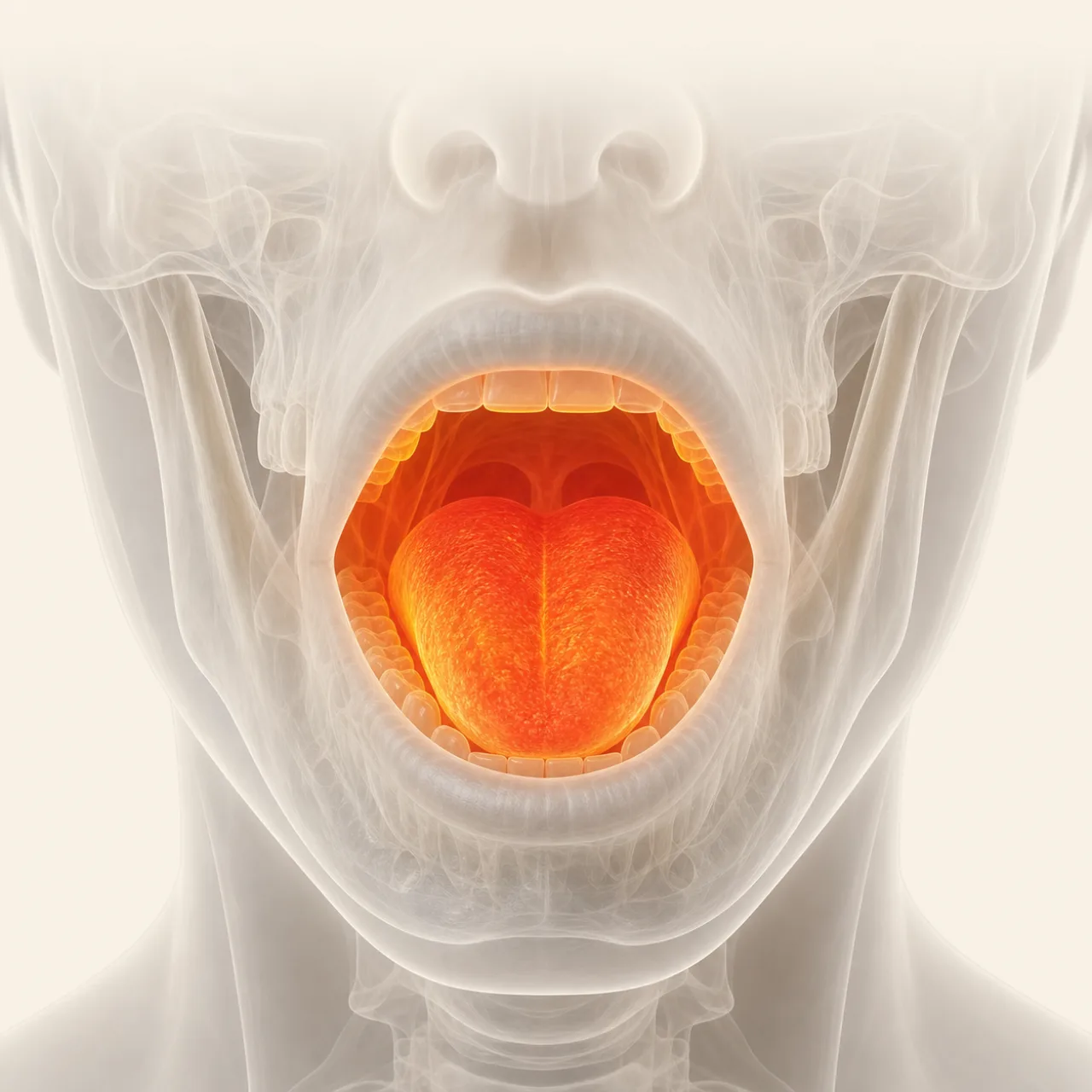
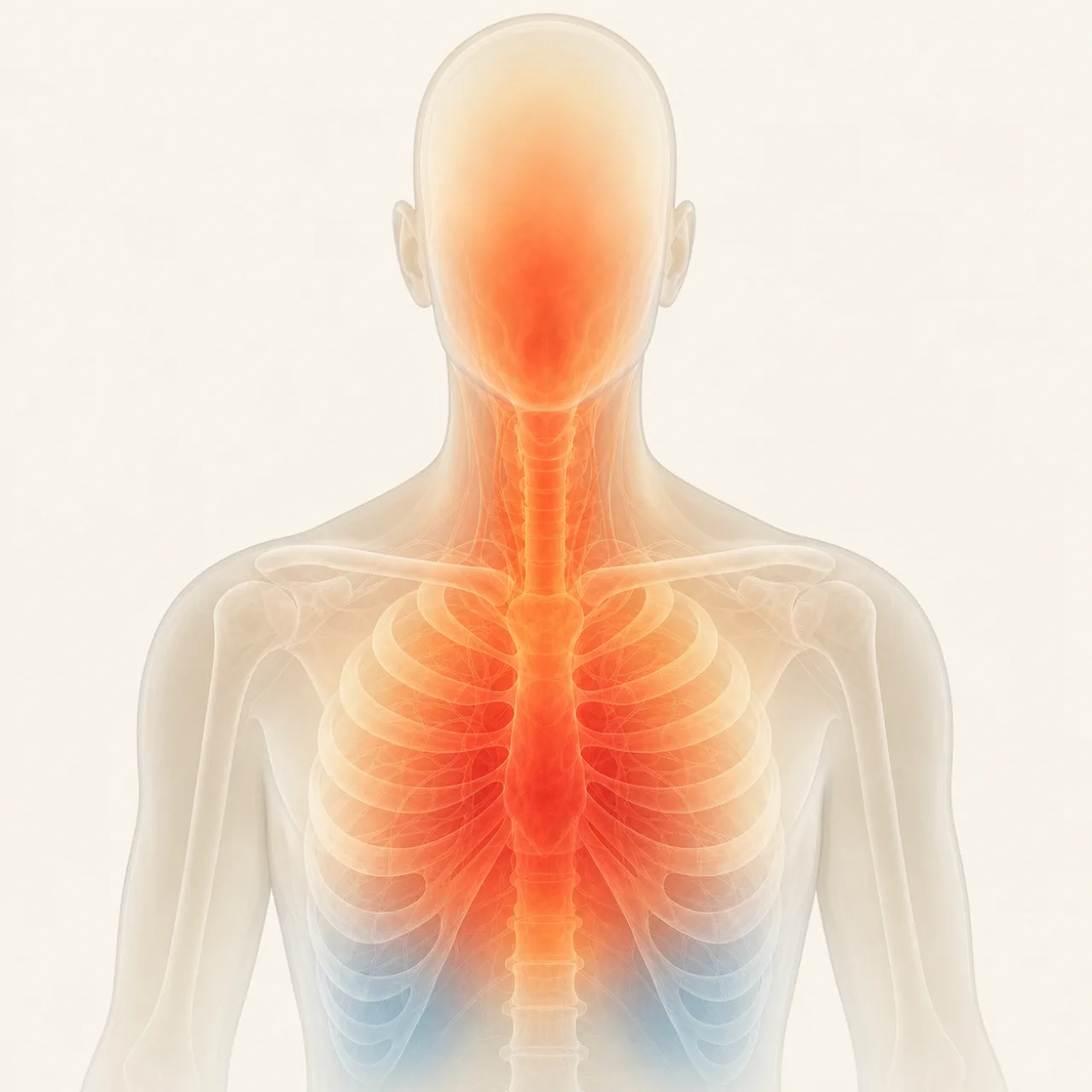
Burning Mouth Syndromeis a symptom where the tongue, lips, and palate feel burning and tingling, often accompanied by changes in taste such as a bitter taste. In many cases, the pain persists even when there are no visual abnormalities, dry mouthsymptoms, insomnia, anxiety,menopause may appear along with the symptoms. It is common for the tongue to feel numb as if it were burned even without eating hot food, and for the symptoms to worsen toward the afternoon.
In Korean medicine, Sim-hwa(心火) or Eum-heo (陰虛) is understood as deficiency heat rising to the tongue. This is categorized into cases where stress blocks the flow of Qi, turning it into heat, or cases where deficiency heat arises due to a lack of bodily fluids.
Why the tongue specifically? The tongue (舌) has been viewed since ancient times as the sprout of the heart (心) (the sprout苗), meaning it is where the state of the heart is revealed. Therefore, when fire (火) in the heart is excessive, that heat rises to the tongue, especially the tip, manifesting as a burning sensation or redness. Additionally, the tongue remains comfortable only when constantly moistened by bodily fluids (津液), but if Yin (陰) is deficient, the tongue becomes dry and burns. If this is combined with blocked Liver Qi (肝氣) due to stress or damp-heat in the digestive system (濕熱), changes in taste, such as a bitter or astringent taste, occur together.
Because these symptoms often do not show abnormalities in standard tests, many patients feel frustrated after being told that 'nothing is wrong.' However, the fact that visual findings are clear is a different matter from the absence of discomfort. Baekrokdam Han-Yeol Clinic examines the background of heat that is not visible to the naked eye through pattern identification, including tongue diagnosis (舌診).
Then, in my case, where does the burning sensation in the mouth come from? Even for the same burning sensation, the cause of the heat differs from person to person. Therefore, we divide the types into four categories even within the same symptom.
Different types of the same symptom
It is divided into four categories depending on which organ the heat causing the burning sensation originates from.
Excessive Heart Fire Type (心火熾盛)
A type where the energy of the heart (心) is a type where the fire of the heart is excessive and surges to the tongue. Since the tongue is the sprout of the heart, the tip of the tongue is particularly red and sore, accompanied by heart palpitations, anxiety, restlessness, and insomnia. The mouth may become dry and urine may become dark yellow.
The approach is to lower the excessive Heart Fire.
Yin Deficiency with Fire Type (陰虛火旺)
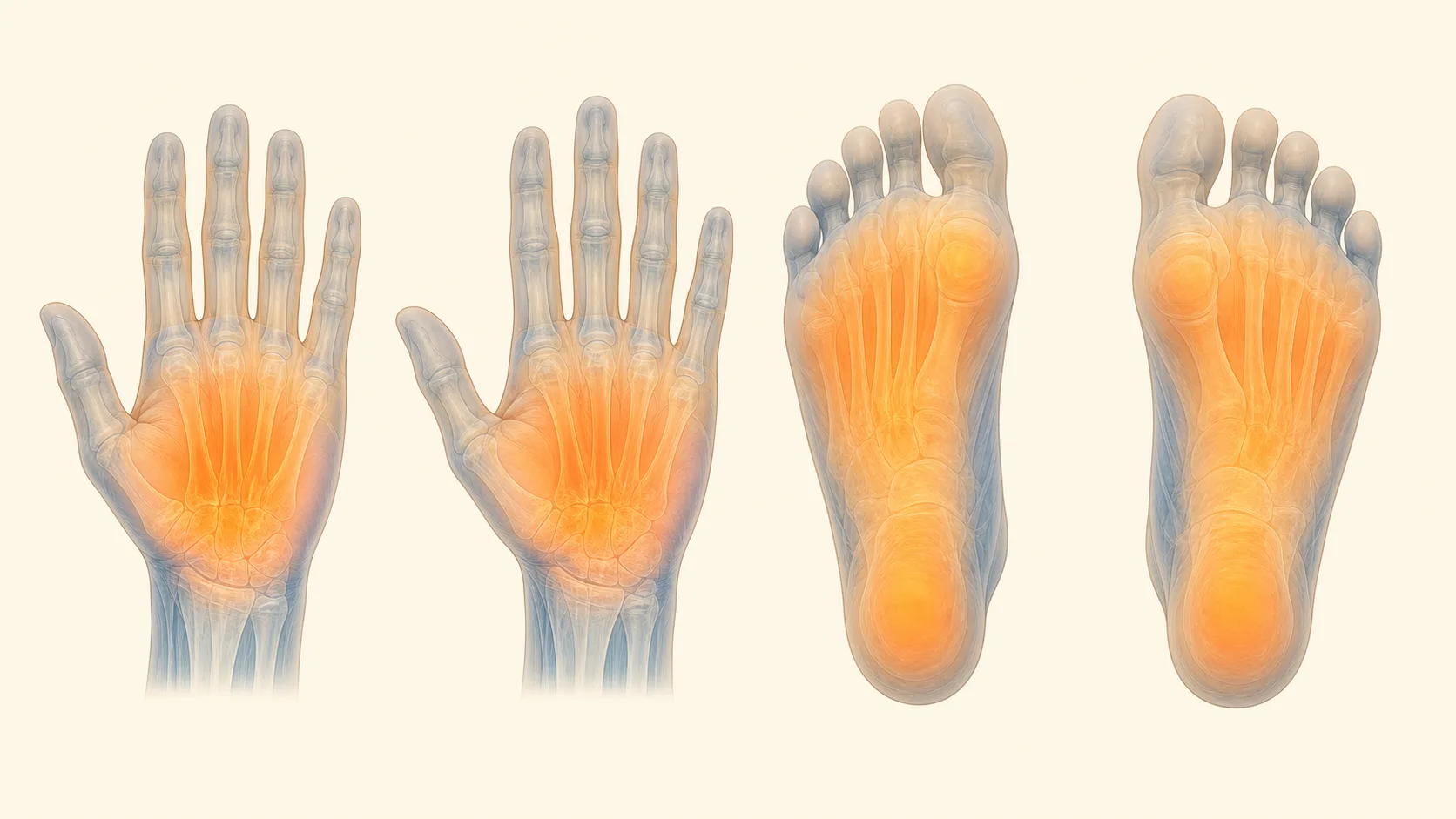
bodily fluids (陰) are depleted, causing deficiency heat to rise. Severe dry mouth occurs around menopause, pain worsens at night or in the evening, and heat in the palms and soles along with night sweats appear. The tongue may appear cracked, red, or have very little coating.
The approach is to replenish the deficient Yin.
Liver Qi Stagnation type (肝氣鬱結)
This is a type where energy is blocked due to stress. There is a sensation of something stuck in the throat, pain fluctuates according to emotional swings, and it may be accompanied by sighing or stiffness in the flanks. The pain tends to worsen when focused on and is forgotten when immersed in other activities.
The approach is to resolve the blocked Qi.
Spleen and Stomach Damp-Heat Type (脾胃濕熱)
Spleen and Stomach ("脾胃)'s dampness ("濕) and heat ("熱) is a congested type. Since the spleen and stomach connect to the mouth(口), digestion is often poor, a strong bitter or astringent taste is felt in the mouth, and the tongue coating is thick and yellow. These symptoms tend to worsen after consuming greasy, spicy foods or alcohol.
The approach to treatment is to clear the damp-heat accumulated in the spleen and stomach.
When dividing these into four types, some things previously taken for granted regarding burning mouth syndrome appear differently. Let's start by addressing some common misconceptions encountered in the clinic.
Common Misconceptions
"Since the tests show no abnormalities, I'm just imagining it or pretending to be sick."
Burning Mouth Syndrome is a representative condition where actual pain persists even though the visual appearance is clear. The fact that it is invisible does not mean it is not there, and the background of the heat can be examined through pattern identification (Byeonjeung).
"Since my tongue hurts, it must be a mouth sore (stomatitis)."
Stomatitis has visible lesions such as ulcers, but Burning Mouth Syndrome involves a tingling pain while the mucosa remains generally clear. If changes such as a white coating, ulcers, or a reticular pattern are visible, it may be a different disease, so differential diagnosis is required first.
"Since my mouth is dry, drinking plenty of water will cure it."
In many cases, drinking water only provides temporary relief and does not resolve the root cause. If the ability to produce bodily fluids is weakened due to Yin deficiency, water intake alone has limits, and the underlying cause type must be examined.
"It will improve quickly if I stop eating spicy foods."
For the spleen-stomach damp-heat type, reducing irritating foods is helpful, but if the background is heart-fire or Yin deficiency, dietary control alone has limits. The management direction varies by type.
While the absence of visual abnormalities is a characteristic of burning mouth, it is necessary to differentiate it from other oral diseases that are easily confused. Below are clues to help distinguish them.
Points to verify even if symptoms seem similar
Oral candidiasis
A fungal infection causes a white coating on the tongue, and when wiped away, red flesh is revealed. This often occurs when immunity is low.
Exfoliative glossitis (geographic tongue)
The surface of the tongue peels in a map-like pattern and feels stinging. It differs in that the mucosal changes are clearly visible.
Oral lichen planus
An autoimmune-related disease that causes white, net-like lines on the oral mucosa and induces pain.
Nutritional deficiency tongue pain
A case where the tongue mucosa becomes smooth and painful due to anemia or Vitamin B deficiency, requiring nutritional supplementation.
Tongue cancer
Characterized by ulcers that do not heal or the presence of a hard lump, whereas in Burning Mouth Syndrome, the mucosa is generally clear visually.
Therefore, in actual clinical practice, we identify the type by reading the signals sent by the body, even if there are no visual abnormalities.
How this is evaluated during a medical consultation
Tongue diagnosis (舌診) · abdominal diagnosis (腹診) and pulse diagnosis (脈診) are examined together; even if there are no visible abnormalities, the type can be categorized through pattern identification (Byeonjeung). We check the area of pain (tip of the tongue, entire tongue, palate), whether taste changes (bitterness, dryness/astringency) are present, the time of onset (morning/afternoon), and the relationship with emotions or food. The color of the tongue and the thickness and color of the tongue coating are examined to distinguish between tendencies of heart-fire, yin deficiency, or damp-heat.
Once these four types are identified, the cause of the heat rising to the tongue can be determined even without visible abnormalities, and the direction of subsequent treatment is decided accordingly.
From the perspective of heat and cold, this is viewed as a process where the causes of heat accumulation build up.
- Accumulation of causes that lead to heat concentration
- The body's regulatory functions cannot keep up
- This is seen as manifesting through symptoms such as upward heat or dryness
The process of verification during medical evaluation
Now, we verify when and how your symptoms change
Since the way discomfort manifests can differ even within the same diagnosis, we review existing test results alongside the progression of symptoms.

Pattern Identification (Byeon-jeung)
Symptoms are verified in detail through pulse diagnosis and medical interview
We use pulse diagnosis and patient interviews to identify heat syndrome tendencies and accompanying patterns, then explain the approach best suited to your current condition.
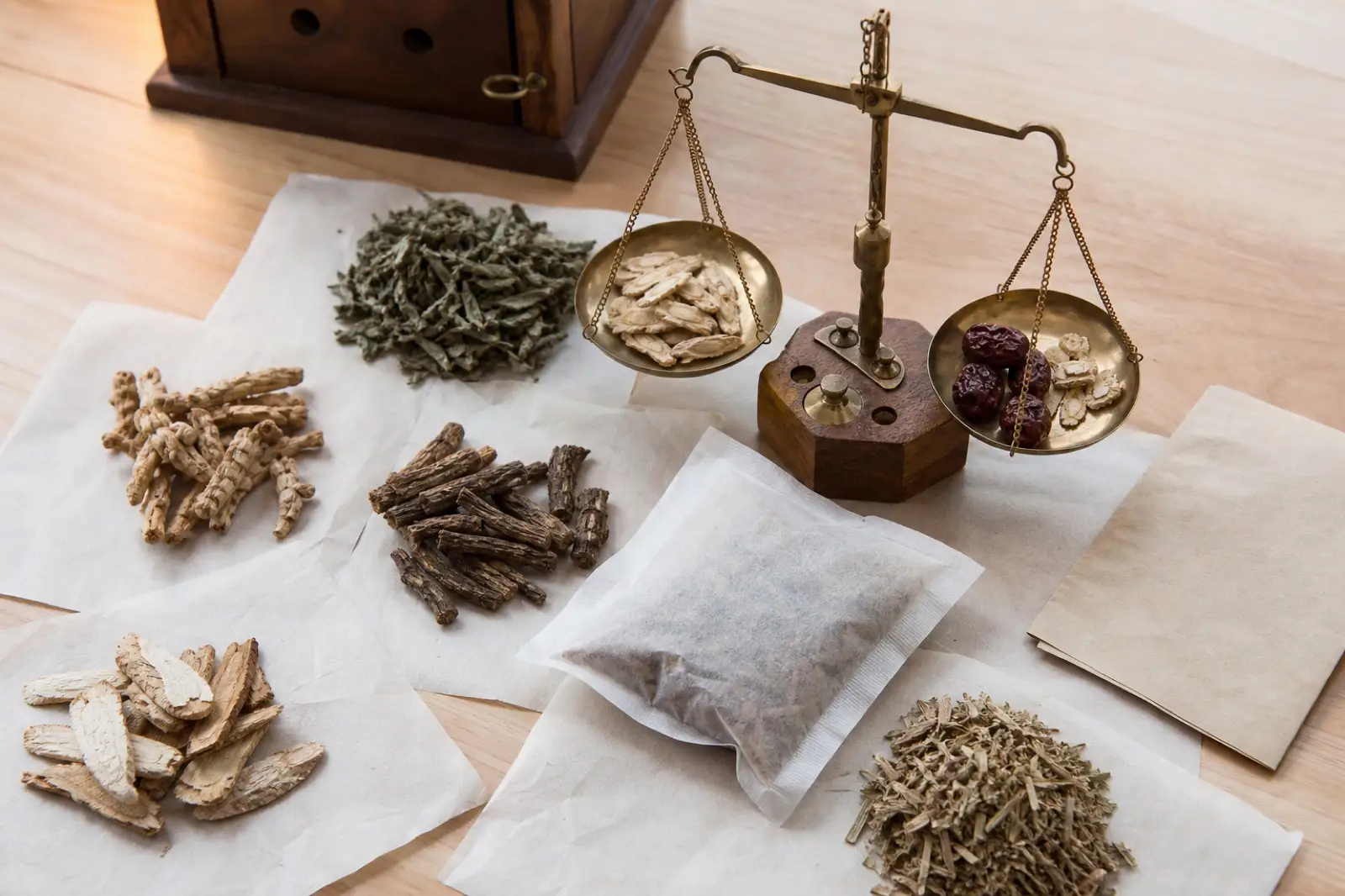
The prescription direction is determined, and changes after administration are verified
Based on the findings from the medical interview and examination, the prescription direction is explained, and the same director oversees everything from preparation to the changes after administration.
 Medical and Content Review
 Baekrokdam's medical standards
Burning Mouth Syndrome: We listen to the progression of symptoms before the name of the condition
We check the timing and area where the feeling of heat begins, along with changes in sweating, thirst, sleep, and nervousness. Even with the same diagnosis, the way the body produces and distributes heat varies; therefore, the categories identified through pulse, tongue, and patient interviews are linked to the Korean herbal medicine prescription and progress monitoring.
"For discomfort that cannot be explained by test results alone, we trace back through the symptoms starting from when they first began."
- Graduated from Kyung Hee University College of Korean Medicine
- Chief Director of Baekrokdam Korean Medicine Clinic
Before Your Consultation
Please make a note of the time when heat rises, its relationship with meals, sleep, and nervousness, as well as any recent tests and medications you are taking.
During Your First Visit
Rather than concluding with a single symptom name, we categorize the onset, aggravating factors, and accompanying symptoms based on the patterns of cold and heat.
Once Treatment Begins
Prescriptions are adjusted based not only on the intensity of discomfort but also on the frequency, recovery time, and changes observed in your daily life.